
Agent Requirements Document (ARD) for
Upgrade Orchestrator
An intelligent AI agent that autonomously orchestrates end-to-end software upgrades from initial planning through automated testing to production release, ensuring reliable and efficient deployment processes.
Goal: To eliminate manual intervention in software upgrade processes by intelligently coordinating code builds, comprehensive testing, deployment strategies, and rollback mechanisms across diverse application portfolios and infrastructure environments.
Core Intelligence Layer Requirements
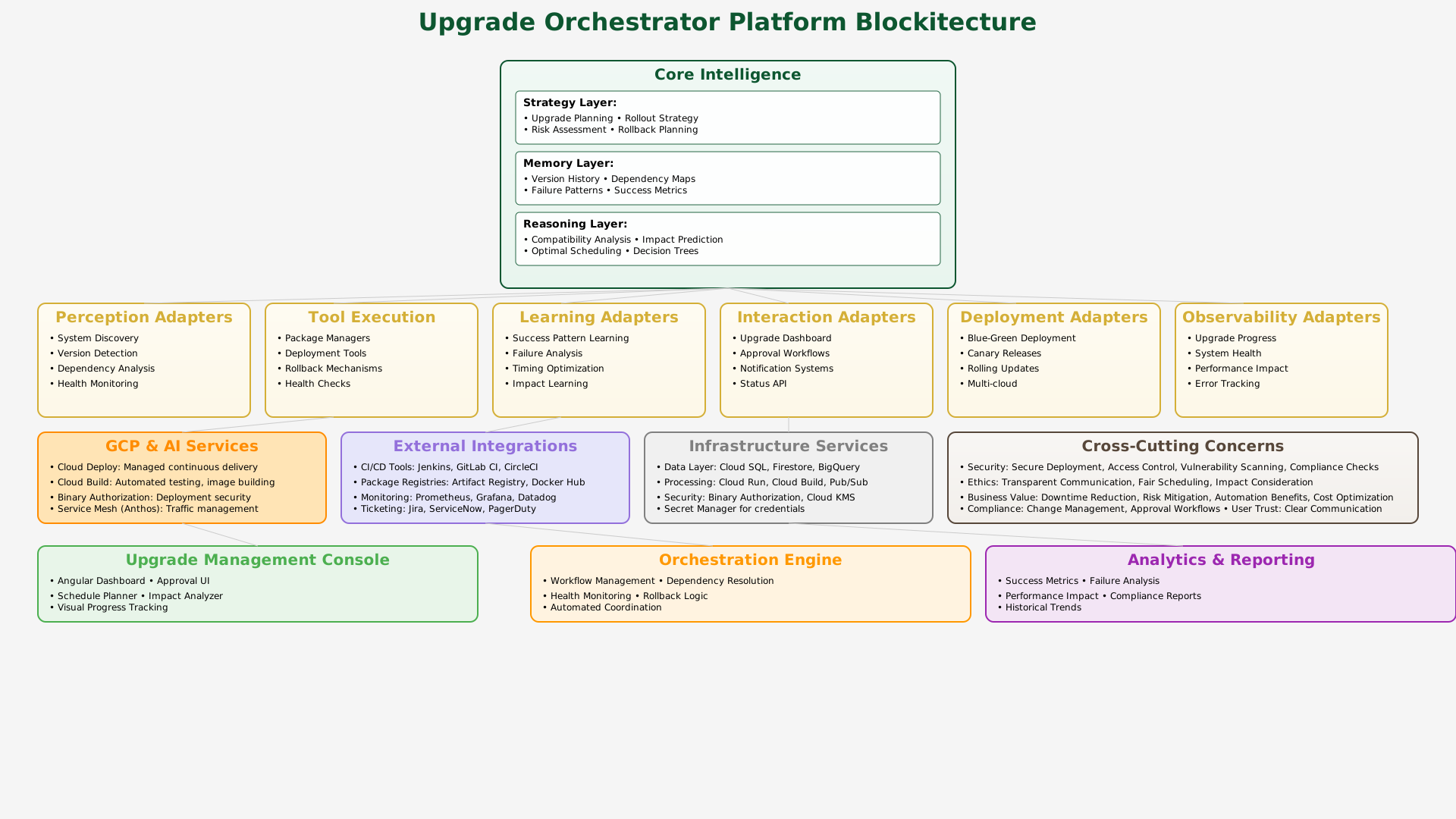
The agent's orchestration "brain," combining deep DevOps expertise with intelligent automation to manage complex multi-stage upgrade processes while maintaining system reliability and minimizing business disruption.
Strategy Layer
- Release Planning: Decompose complex upgrades into sequential phases (build → test → stage → deploy → verify → release) with dependency management.
- Risk Assessment: Evaluate upgrade complexity, business impact, and failure probability to determine optimal deployment strategies (blue-green, canary, rolling).
- Resource Orchestration: Coordinate compute resources, testing environments, and infrastructure capacity to support parallel upgrade workflows.
- Rollback Strategy: Pre-plan automated rollback procedures with health checks and recovery mechanisms for each upgrade stage.
Memory Layer
- Upgrade History: Store comprehensive records of past upgrades including success patterns, failure modes, and resolution strategies for similar applications.
- Environment Configuration: Maintain detailed knowledge of development, staging, and production environment specifications and dependencies.
- Test Case Repository: Remember successful test patterns, regression suites, and quality gates for different types of applications and upgrade scenarios.
- Performance Baselines: Track application performance metrics to detect regressions and validate upgrade success criteria.
Reasoning Layer
- Multi-Stage Decision Making: Execute complex conditional logic based on test results, performance metrics, and business rules to progress or halt upgrades.
- Chain of Upgrade Reasoning: Provide detailed audit trails explaining why specific upgrade paths were chosen and how decisions were made at each stage.
- Dependency Analysis: Understand application interdependencies, database schema changes, and infrastructure requirements to orchestrate coordinated upgrades.
- Confidence Scoring: Calculate upgrade success probability and risk scores to inform go/no-go decisions at each release gate.
Adapters Layer Requirements
Specialized interfaces enabling the agent to integrate with CI/CD pipelines, testing frameworks, and deployment platforms to execute sophisticated upgrade orchestration across diverse technology stacks.
Perception
- Code Repository Analysis: Monitor Git repositories, branching strategies, and code changes to understand upgrade scope and complexity.
- Infrastructure State Assessment: Analyze current system health, resource utilization, and capacity constraints across development and production environments.
- Test Results Processing: Parse results from unit tests, integration tests, performance tests, and security scans to assess upgrade readiness.
Tool Execution
- CI/CD Integration: Execute build pipelines through Jenkins, GitLab CI, GitHub Actions, and Azure DevOps with dynamic configuration adjustment.
- Container Orchestration: Deploy and manage applications through Kubernetes, Docker Swarm, and cloud-native container platforms.
- Infrastructure Automation: Coordinate infrastructure changes through Terraform, Ansible, and cloud APIs (AWS, Azure, GCP).
- Testing Framework Integration: Execute automated test suites through Selenium, Cypress, JUnit, PyTest, and custom testing frameworks.
Learning
- Upgrade Pattern Recognition: Learn from successful and failed upgrades to improve future orchestration strategies and risk prediction.
- Performance Optimization: Continuously optimize upgrade processes based on execution time, resource usage, and success rates.
- Failure Mode Analysis: Analyze upgrade failures to enhance pre-upgrade validation checks and rollback mechanisms.
Interaction
- DevOps Dashboard: Provide real-time visibility into upgrade progress, test results, and deployment status across all environments.
- Stakeholder Notifications: Send targeted alerts to development teams, QA engineers, and operations staff based on upgrade milestones and approval requirements.
- Approval Workflows: Route high-risk upgrades through appropriate approval chains with detailed impact analysis and risk assessment.
Deployment
- Multi-Environment Support: Orchestrate upgrades across development, staging, and production environments with environment-specific configurations.
- High Availability: Implement redundant orchestration capabilities to ensure upgrade processes continue even during system failures.
- Scalable Architecture: Handle multiple concurrent upgrades across different applications and services with intelligent resource allocation.
Observability
- Upgrade Metrics Tracking: Monitor upgrade success rates, duration, rollback frequency, and quality metrics across all managed applications.
- Performance Impact Analysis: Track post-upgrade performance changes and correlate with upgrade decisions and deployment strategies.
- Audit Trail Management: Maintain comprehensive logs of all upgrade decisions, approvals, and actions for compliance and troubleshooting.
Cross-Cutting Concerns Layer Requirements
Enterprise-grade reliability principles ensuring the agent operates with highest quality standards while delivering measurable improvements in deployment velocity and system stability.
Security
- Secure Build Pipelines: Ensure all upgrade processes include security scanning, vulnerability assessment, and compliance validation.
- Credential Management: Manage deployment credentials securely through enterprise secret management systems with rotation and audit capabilities.
- Code Integrity: Verify code signing, artifact integrity, and supply chain security throughout the upgrade process.
Ethics
- Transparent Decision Making: Provide clear explanations for upgrade decisions, risk assessments, and rollback actions to development teams.
- Fair Resource Allocation: Ensure upgrade resources are allocated fairly across teams and projects without bias toward specific applications or stakeholders.
- Quality Commitment: Never compromise on quality gates or testing standards to meet aggressive deployment timelines.
Business Value
- Deployment Velocity: Measure improvements in time-to-market through faster, more reliable upgrade processes with reduced manual intervention.
- Quality Metrics: Track reduction in production issues, rollback frequency, and customer-impacting incidents from improved upgrade quality.
- Operational Efficiency: Calculate cost savings from reduced manual effort, faster problem resolution, and improved developer productivity.
Compliance
- Change Management: Follow enterprise change management procedures with proper documentation, testing evidence, and approval workflows.
- Regulatory Compliance: Ensure upgrade processes maintain compliance with industry regulations (SOX, FDA validation, financial services requirements).
- Audit Documentation: Provide comprehensive audit trails for all upgrade activities with deployment evidence and approval chains.
User Trust
- Predictable Upgrades: Provide reliable upgrade outcomes with clear success criteria and consistent quality standards across all applications.
- Explainable Automation: Clearly explain upgrade decisions, test results, and deployment strategies to build confidence in automated processes.
- Human Override: Enable development teams to intervene, modify, or halt automated upgrades with clear escalation procedures.