

Common Architectural Patterns for Multi Agent Systems
Proven architectural patterns that enable sophisticated multi-agent systems to operate at enterprise scale. These patterns provide the foundation for building modular, intelligent, and adaptable AI solutions that can handle complex business challenges through coordinated agent collaboration.
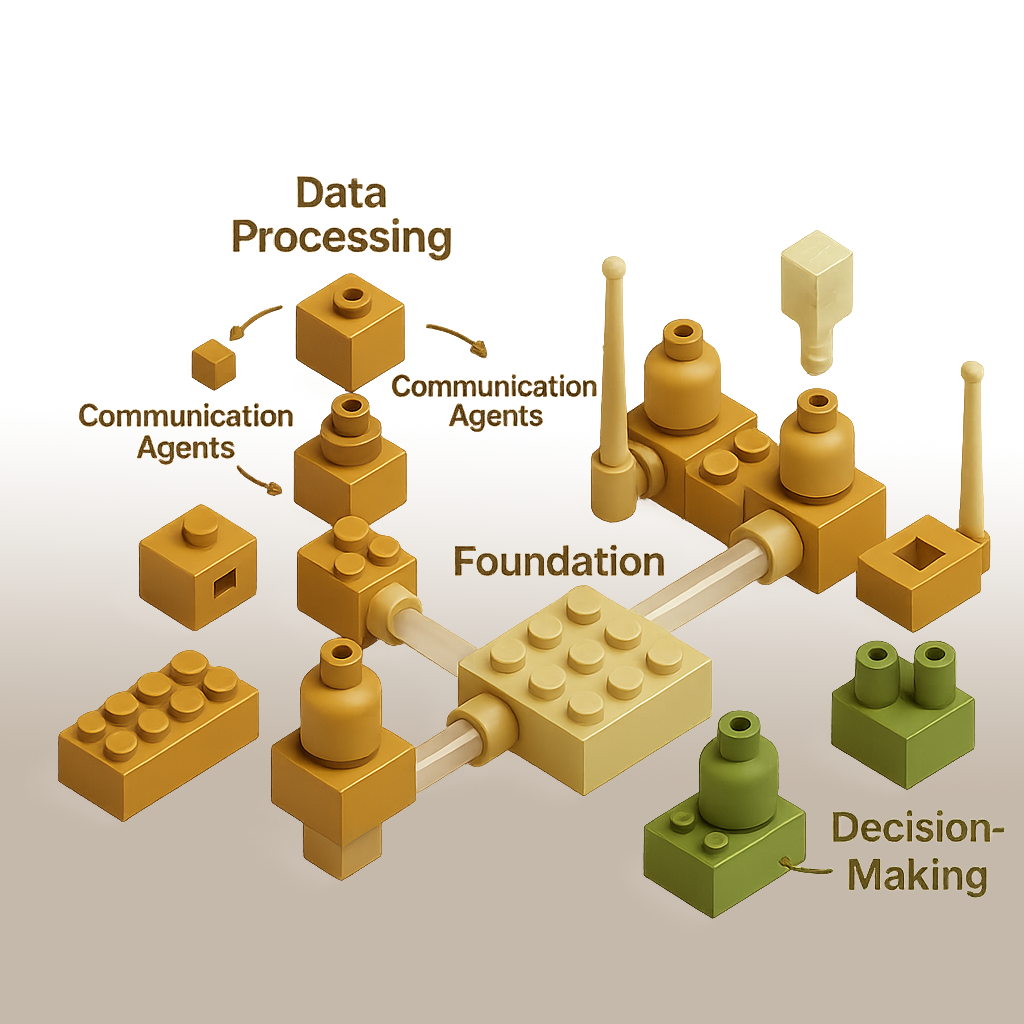
Agent Composability Pattern
Modular AI Systems at Enterprise Scale
A foundational architectural approach for building modular, extensible AI systems that enable organizations to construct sophisticated AI solutions by assembling specialized agents. This pattern creates coordinated systems where each agent contributes distinct capabilities while operating within a unified framework.
Key Principles
- Define standardized interfaces and communication protocols
- Allow independent development of AI components
- Enable flexible combination and reconfiguration of agents
Core Technical Components
Infrastructure
- • Agent Registry
- • Interface Definition Framework
- • Communication Bus
Deployment
- • Containerized deployment (Kubernetes)
- • Distributed tracing with OpenTelemetry
- • Service mesh integration
Implementation Roadmap
- Phase 1: Foundation (1-2 months) - Establish core infrastructure
- Phase 2: Initial Implementation (2-3 months) - Deploy first agent modules
- Phase 3: Expansion (3+ months) - Scale to multiple domains
- Phase 4: Enterprise Scale (Ongoing) - Full production deployment
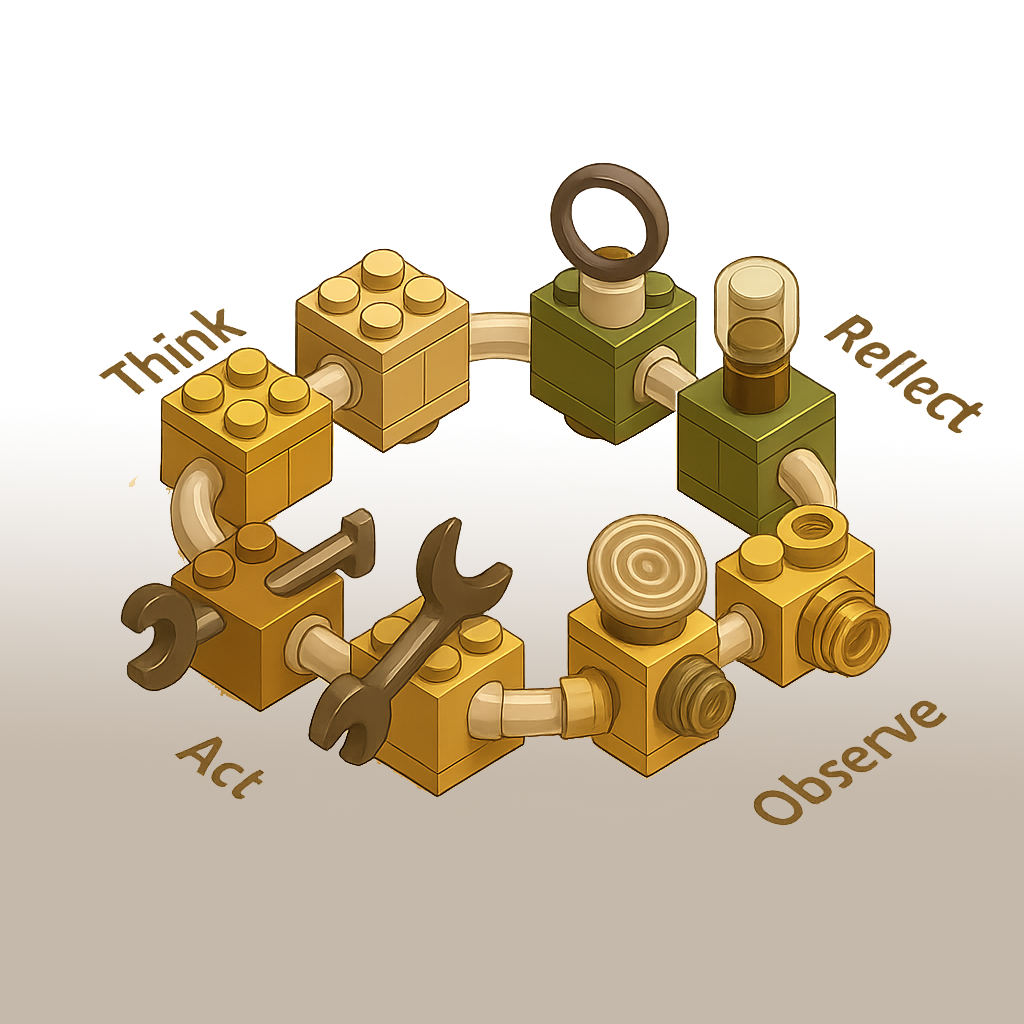
ReAct (Reasoning and Acting) Framework
Think Before You Act Decision-Making
A breakthrough AI agent architecture that integrates reasoning and action execution through an explicit, cyclical process. The framework enables "think before you act" decision-making by implementing deliberate reasoning steps between observation and action, creating more reliable, explainable, and effective AI systems.
Key Components
- Observation Module - Multi-modal input processing
- Reasoning Engine - Chain-of-thought reasoning
- Planning Mechanism - Goal decomposition
- Action Selection - Outcome simulation
- Execution Module - Comprehensive logging and audit trails
Core Characteristics
The ReAct framework explicitly integrates reasoning steps with action execution, creating:
- ✓ Transparent, trustworthy AI systems
- ✓ Maintained internal reasoning chains
- ✓ Traceable logic connecting observations to actions
- ✓ Enhanced decision transparency and error reduction
Industry Applications
BFSI
Fraud detection, credit underwriting
Manufacturing
Quality control, process optimization
Healthcare
Diagnostic support, treatment planning
Retail/eCommerce
Product recommendations, pricing strategies
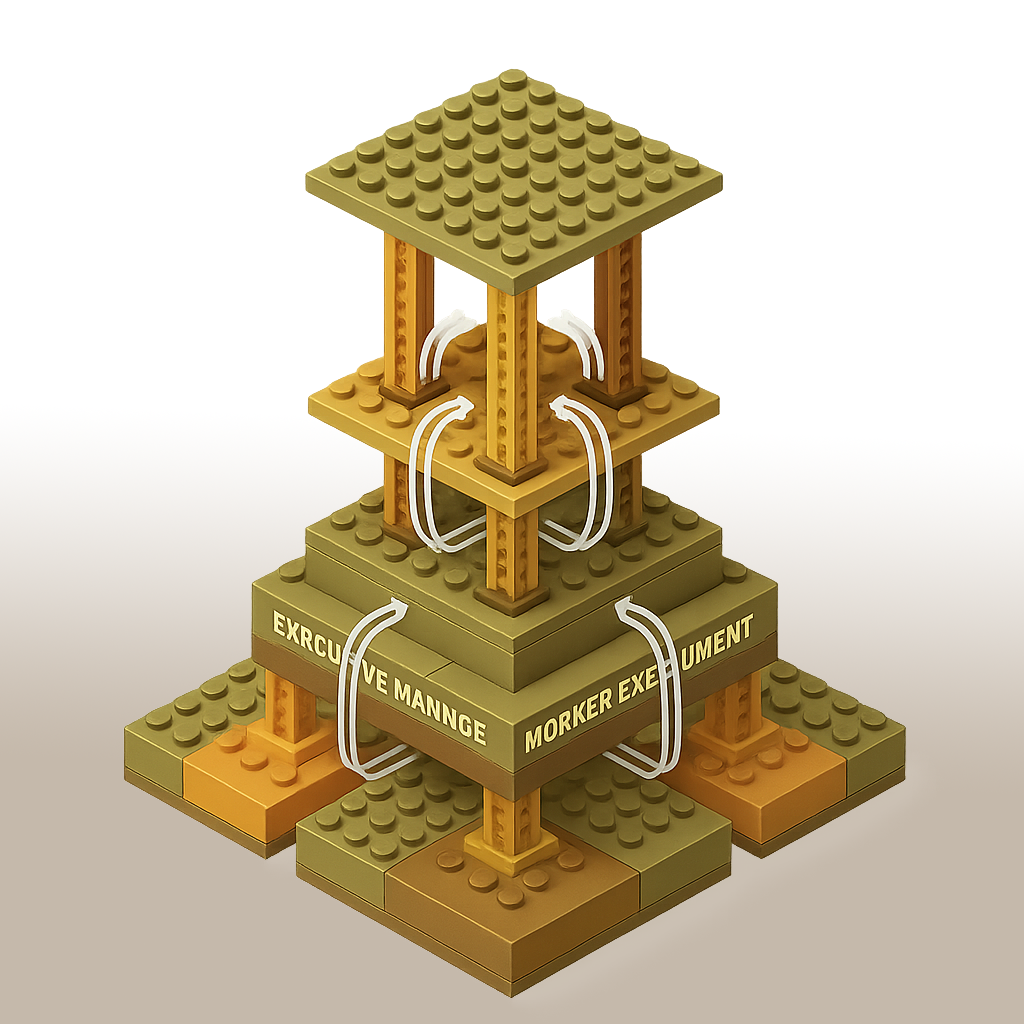
Hierarchical Multi-Agent Architecture
Decision Pyramids for Complex Organizations
A sophisticated AI system organizational structure that mirrors complex human organizations, establishing multiple layers of agents with different responsibilities, capabilities, and scopes of authority. This creates a "decision pyramid" with strategic oversight and specialized task execution.
Organizational Layers
- Executive Layer: Strategic goals and oversight
- Management Layer: Domain-specific planning and coordination
- Specialist Layer: Focused task execution and domain expertise
Key Characteristics
Higher-level agents handle strategic direction and oversight while delegating increasingly specific tasks to specialized agents at lower levels. This architecture enables:
- • Complex problem solving through structured decomposition
- • Combination of global context with deep domain expertise
- • Scalable decision-making processes
- • Clear responsibility boundaries and accountability
Enterprise Benefits
- Mirrors organizational structures
- Enables strategic alignment
- Supports complex workflows
- Facilitates knowledge distribution
- Improves decision traceability
- Enhances system resilience

Manager-Worker Pattern
Efficient Task Distribution at Scale
A hierarchical AI agent architecture that separates task orchestration from execution through distinct agent roles. This pattern enables efficient complex task handling by creating clear divisions of responsibility, decomposing complex problems into manageable units of work that can be efficiently distributed across specialized components.
Key Components
- Manager Agent: Handles task decomposition, allocation, and result synthesis
- Worker Agents: Execute specific subtasks with specialized capabilities
- Task Queue: Facilitates efficient work distribution
- Result Aggregation: Combines worker outputs into cohesive results
- Monitoring Layer: Tracks progress and handles exceptions
Architectural Strengths
Efficiency Benefits
- • Specialization efficiency
- • Centralized coordination
- • Resource optimization
Scalability Features
- • Horizontal scaling
- • Dynamic worker allocation
- • Load balancing
Recommended Implementation Stack
- Google Cloud Functions for worker agents
- Vertex AI for ML capabilities
- Pub/Sub for message queuing
- Dataflow for stream processing
- Cloud Scheduler for orchestration

Memory-Augmented Context Windows Pattern
Extended Temporal Awareness for AI Systems
An advanced architectural pattern that enables AI agents to maintain comprehensive understanding across extended interactions and complex processes through sophisticated memory structures. This pattern extends AI systems' "working memory" beyond fixed context windows through intelligent persistence, retrieval, and information integration.
Multi-Tier Memory System
- Working Memory: Immediate context and active processing
- Short-Term Memory: Recent interactions and temporary state
- Episodic Memory: Specific event sequences and experiences
- Semantic Memory: Long-term knowledge and relationships
Technical Implementation
Storage Technologies
- • Vector Storage for embeddings
- • Graph Structures for relationships
- • Time-Series Databases for temporal data
Core Techniques
- • Semantic retrieval mechanisms
- • Intelligent memory management
- • Context integration methods
Unique Value Proposition
Extended Reasoning Horizons
- Maintain context across hours, days, or months of interaction
- Build comprehensive understanding of complex processes
- Enable continuous learning and adaptation
- Support long-term relationship management
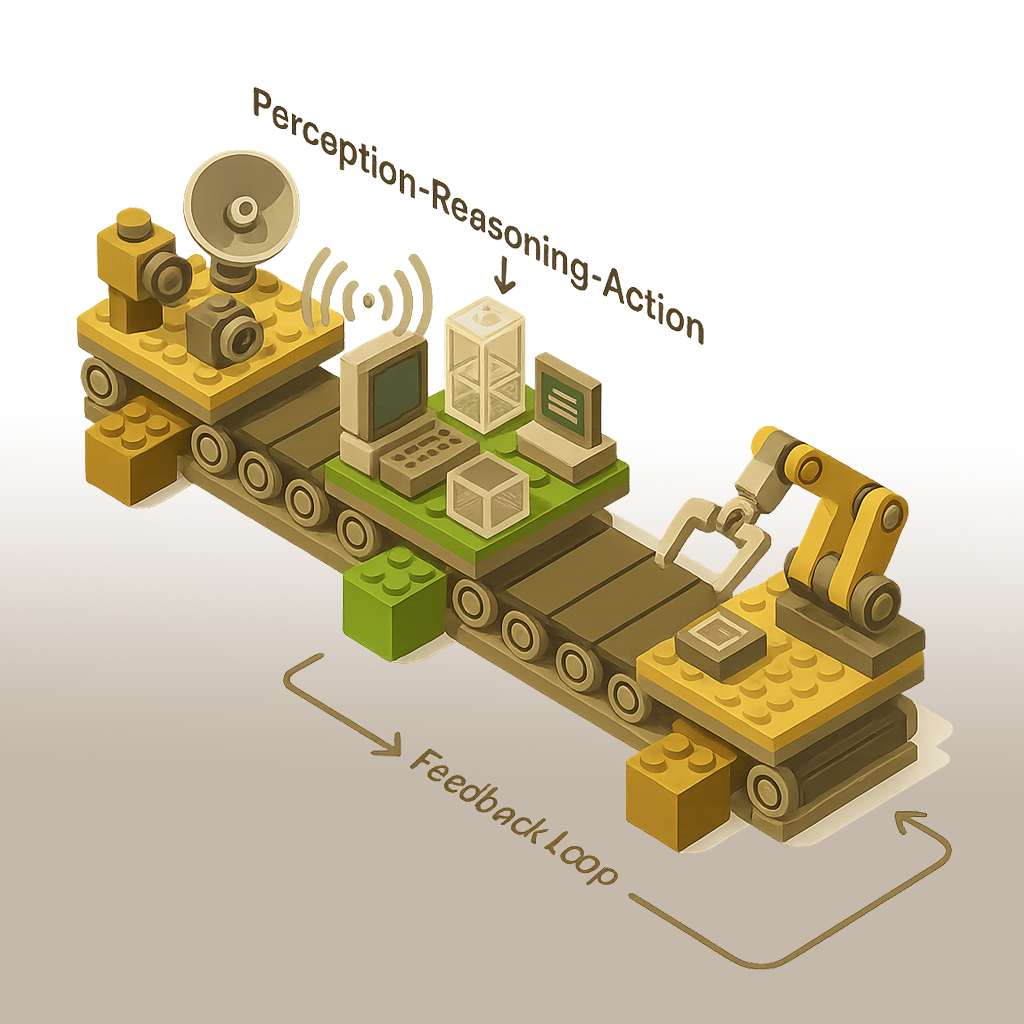
Perception-Reasoning-Action (PRA) Loop Pattern
Complete Cognitive Systems for Enterprise AI
A cognitive architecture that mimics human information processing, creating a continuous feedback loop where environmental inputs are transformed into structured representations, analyzed through reasoning processes, translated into appropriate actions, and refined through outcome evaluation.
Core Components
- Perception System: Multi-modal input processing for comprehensive environmental awareness
- Reasoning Engine: Analytical decision-making with logical inference
- Action Framework: Execution capabilities with precise control
- Feedback Mechanism: Outcome evaluation and learning
- Memory System: Knowledge storage and retrieval
Distinctive Features
- ✓ Comprehensive processing from input to action
- ✓ Continuous improvement through closed-loop learning
- ✓ Sophisticated environmental awareness
- ✓ Autonomous task completion capabilities
- ✓ Real-time adaptation to changing conditions
Cognitive Capabilities
Perceive
Process complex environments through multiple sensory channels
Reason
Analyze information and make intelligent decisions
Act
Execute appropriate actions based on reasoning
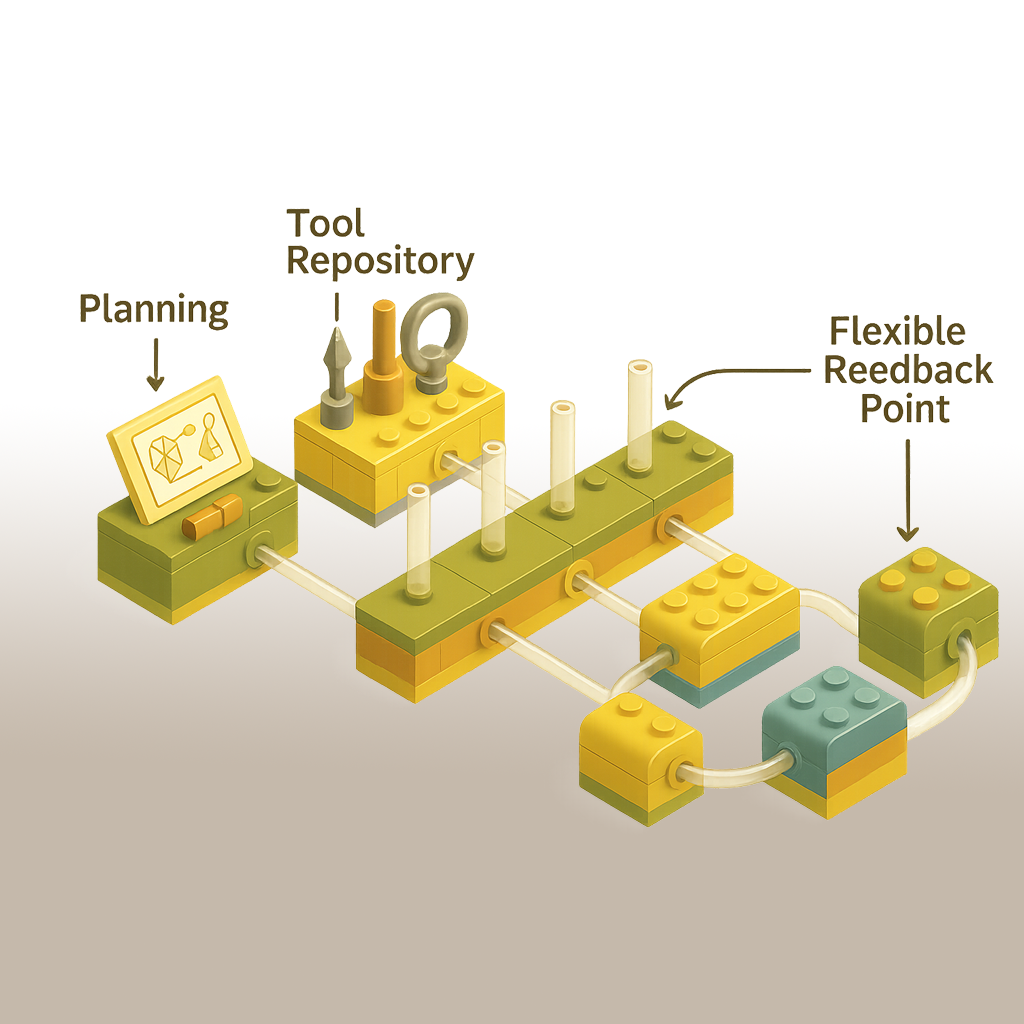
Agentic Workflows Pattern
Intelligent Business Process Automation
A revolutionary approach to business process automation that embeds AI agents as intelligent nodes within structured workflow frameworks. This pattern creates hybrid systems where workflow orchestration provides structure and governance while embedded AI agents deliver intelligence and adaptability at decision points.
Key Components
- Workflow Engine: Orchestrates process execution and flow control
- Decision Agents: Intelligent nodes making context-aware decisions
- Integration Framework: Connects to enterprise systems
- Monitoring System: Tracks execution and performance
- Governance Layer: Ensures compliance and audit trails
Distinctive Features
Process Benefits
- • Process Discipline with structured paths
- • Intelligent Decisioning at critical junctures
- • Exception Handling within boundaries
Governance Features
- • Compliance throughout execution
- • Complete audit trails
- • Risk management integration
Implementation Roadmap
- Foundation Phase: Establish workflow engine and decision framework
- Integration Phase: Connect to enterprise systems and data sources
- Intelligence Phase: Deploy AI agents at decision points
- Optimization Phase: Continuous improvement and scaling
Build Enterprise-Grade Multi-Agent Systems
These architectural patterns provide the foundation for creating sophisticated AI systems that can tackle complex business challenges through intelligent agent collaboration.