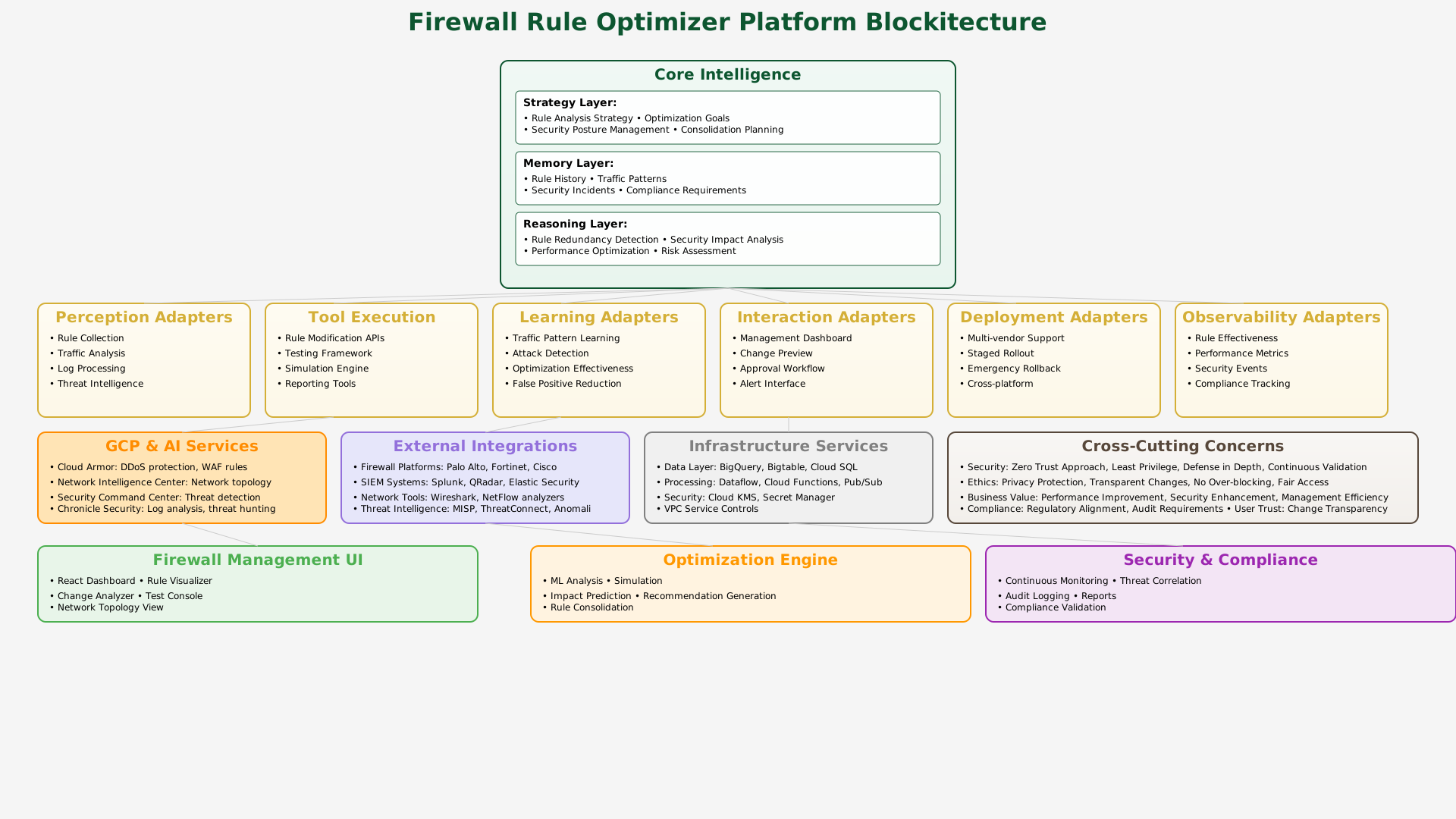

Agent Requirements Document (ARD) for
Firewall Rule Optimizer
An intelligent AI agent that analyzes existing firewall configurations, eliminates redundant inbound rules, and automatically generates comprehensive outbound security policies across AWS and GCP environments.
Goal: To autonomously optimize cloud security posture by cleaning up firewall rule sprawl, implementing zero-trust outbound policies, and maintaining continuous compliance with security best practices across multi-cloud infrastructure.
Core Intelligence Layer Requirements
The agent's security-focused "brain," combining deep network security expertise with cloud infrastructure knowledge to intelligently optimize firewall configurations while maintaining zero-trust principles.
Strategy Layer
- Security Policy Planning: Decompose complex firewall requirements into manageable rule sets (ingress → egress → application-specific → compliance).
- Risk-Based Prioritization: Align security optimizations with business risk tolerance and compliance requirements (PCI-DSS, SOC2, ISO27001).
- Zero-Trust Architecture: Implement principle of least privilege across all network communications with default-deny policies.
- Multi-Cloud Coordination: Orchestrate consistent security policies across AWS Security Groups, GCP Firewall Rules, and hybrid environments.
Memory Layer
- Security Baseline Storage: Maintain organization-specific security policies, approved protocols, and exception lists for different environment types.
- Threat Intelligence Integration: Store and correlate threat intelligence data with firewall rules to identify potential security gaps.
- Configuration History: Track all firewall rule changes with rollback capabilities and approval chains for audit compliance.
- Application Traffic Patterns: Remember legitimate application communication patterns to distinguish between normal and anomalous traffic flows.
Reasoning Layer
- Multi-Dimensional Security Analysis: Evaluate firewall rules considering security impact, performance implications, and operational complexity simultaneously.
- Chain of Security Reasoning: Provide detailed justification for each rule optimization with security implications and compliance impact analysis.
- Dependency Analysis: Understand application dependencies and communication flows to prevent breaking legitimate traffic with rule changes.
- Threat Vector Assessment: Calculate security exposure scores and identify potential attack vectors enabled by current rule configurations.
Adapters Layer Requirements
Specialized interfaces enabling the agent to analyze cloud security configurations, implement optimizations, and maintain continuous security posture management across diverse cloud environments.
Perception
- Multi-Cloud Security Scanning: Analyze AWS Security Groups, GCP Firewall Rules, Network ACLs, and VPC configurations across multiple accounts and projects.
- Traffic Flow Analysis: Process VPC Flow Logs, CloudTrail events, and network monitoring data to understand actual communication patterns.
- Compliance Posture Assessment: Evaluate current configurations against security frameworks (CIS Benchmarks, NIST, PCI-DSS) and organizational policies.
Tool Execution
- Cloud Security APIs: Execute rule modifications through AWS EC2, GCP Compute Engine, and Infrastructure-as-Code tools (Terraform, CloudFormation).
- Security Testing: Perform automated security validation tests to ensure optimized rules don't create unintended vulnerabilities.
- Policy Engine Integration: Connect with Open Policy Agent (OPA), AWS Config Rules, and GCP Security Command Center for continuous compliance monitoring.
- Network Simulation: Run traffic simulation tests to validate rule changes before production deployment.
Learning
- Security Incident Correlation: Learn from security incidents and near-misses to improve future firewall rule recommendations and threat detection.
- Attack Pattern Recognition: Identify emerging attack patterns and proactively suggest firewall rules to prevent similar attacks.
- Optimization Outcome Analysis: Track the security and performance impact of applied optimizations to refine future recommendations.
Interaction
- Security Operations Dashboard: Provide centralized visibility into multi-cloud security posture with actionable optimization recommendations.
- Risk-Based Alerting: Send priority-based alerts to security teams about critical vulnerabilities and optimization opportunities.
- Compliance Reporting: Generate automated compliance reports showing security posture improvements and remaining gaps.
Deployment
- Multi-Cloud Architecture: Deploy across AWS, GCP, and hybrid environments with unified security policy management.
- High Availability: Implement redundant deployment with failover capabilities to ensure continuous security monitoring.
- Secure Deployment: Run in isolated security contexts with minimal required permissions and encrypted communications.
Observability
- Security Metrics Dashboard: Monitor security posture improvements, rule optimization success rates, and compliance status across all environments.
- Threat Detection Integration: Connect with SIEM systems and threat detection platforms to correlate security events with firewall rule effectiveness.
- Audit Trail Management: Maintain comprehensive logs of all security rule changes with approval workflows and business justification.
Cross-Cutting Concerns Layer Requirements
Enterprise-grade security principles ensuring the agent operates with the highest security standards while delivering measurable risk reduction and compliance improvement.
Security
- Zero-Trust Operation: The agent itself operates under zero-trust principles with minimal required permissions and encrypted communications.
- Secure Credential Management: All cloud credentials and API keys are managed through secure vaults (AWS Secrets Manager, HashiCorp Vault) with rotation policies.
- Security-First Design: Every optimization prioritizes security improvements over convenience, with explicit trade-off analysis for any security vs. performance decisions.
Ethics
- Transparency in Security: Provide clear explanations for all security decisions without exposing sensitive security details to unauthorized personnel.
- Privacy Protection: Ensure firewall optimizations protect user privacy and don't enable unauthorized data access or surveillance.
- Fair Security: Apply consistent security standards across all applications and user groups without bias or favoritism.
Business Value
- Risk Reduction ROI: Quantify security risk reduction and potential cost avoidance from prevented security incidents and improved compliance posture.
- Operational Efficiency: Measure time savings from automated security management and reduced manual firewall configuration overhead.
- Compliance Cost Savings: Track cost reductions from automated compliance reporting and reduced audit preparation time.
Compliance
- Regulatory Adherence: Ensure all firewall optimizations maintain compliance with industry regulations (PCI-DSS, HIPAA, SOX, GDPR).
- Audit Documentation: Provide comprehensive audit trails with security justification for all rule changes and approval evidence.
- Change Management: Follow enterprise security change management procedures with proper testing, approval, and rollback capabilities.
User Trust
- Explainable Security: Clearly explain security decisions with risk analysis and business impact assessment without compromising security details.
- Predictable Security Posture: Maintain consistent security standards and provide predictable outcomes from security optimizations.
- Security Team Control: Enable security teams to review, modify, or override agent recommendations with clear escalation procedures.