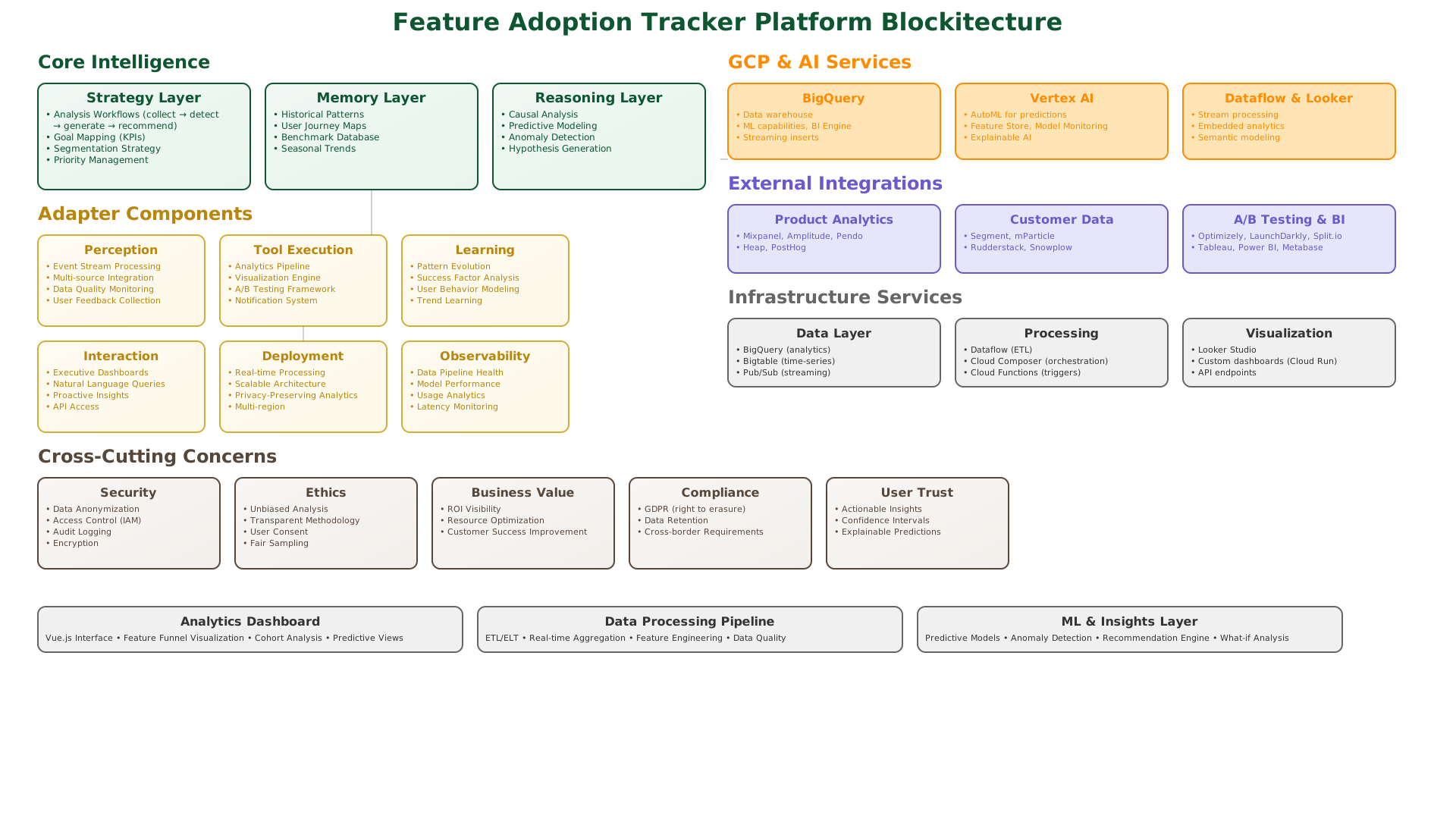

Agent Requirements Document (ARD) for
Feature Adoption Tracker
An intelligent analytics agent that monitors, analyzes, and predicts feature adoption patterns to drive product strategy and user engagement.
Goal: To provide real-time insights into feature adoption rates, identify usage patterns, and recommend strategic actions to maximize feature value and user engagement.
Core Intelligence Layer Requirements
The agent's analytical core that drives insights, predictions, and strategic recommendations for feature adoption optimization.
Strategy Layer
- Task Planning: Structure analysis workflows (data collection → pattern detection → insight generation → recommendation).
- Goal Mapping: Align adoption metrics with business KPIs (user retention, revenue impact, engagement scores).
- Segmentation Strategy: Define user cohorts and analyze adoption patterns by segment.
- Priority Management: Rank features by adoption potential and business impact for focused improvements.
Memory Layer
- Historical Patterns: Store adoption curves and patterns from past feature launches.
- User Journey Maps: Maintain detailed paths showing how users discover and adopt features.
- Benchmark Database: Industry standards and competitor adoption rates for comparison.
- Seasonal Trends: Remember cyclical patterns and external factors affecting adoption.
Reasoning Layer
- Causal Analysis: Identify factors driving or hindering feature adoption using statistical models.
- Predictive Modeling: Forecast adoption curves and identify at-risk features early.
- Anomaly Detection: Flag unusual adoption patterns that require investigation.
- Hypothesis Generation: Create testable theories about adoption barriers and enablers.
Adapters Layer Requirements
Modular interfaces enabling the agent to collect data, generate insights, and communicate findings across the organization.
Perception
- Event Stream Processing: Real-time ingestion of user interaction events.
- Multi-source Integration: Combine product telemetry, support tickets, and user feedback.
- Data Quality Monitoring: Detect and handle incomplete or anomalous data automatically.
Tool Execution
- Analytics Pipeline: Execute complex queries across data warehouses and lakes.
- Visualization Engine: Generate interactive dashboards and adoption funnels.
- A/B Testing Framework: Design and monitor adoption experiments automatically.
- Notification System: Trigger alerts for significant adoption changes.
Learning
- Pattern Evolution: Continuously refine adoption models based on new data.
- Success Factor Analysis: Learn which feature characteristics drive adoption.
- User Behavior Modeling: Build increasingly accurate user segment profiles.
Interaction
- Executive Dashboards: High-level adoption metrics with drill-down capabilities.
- Natural Language Queries: "Which features are underperforming this quarter?"
- Proactive Insights: Push notifications for significant adoption events.
Deployment
- Real-time Processing: Stream processing for immediate adoption insights.
- Scalable Architecture: Handle billions of events without performance degradation.
- Privacy-Preserving: Aggregate analytics without exposing individual user data.
Observability
- Data Pipeline Health: Monitor data freshness and processing latency.
- Model Performance: Track prediction accuracy and insight relevance.
- Usage Analytics: Meta-analytics on how teams use adoption insights.
Cross-Cutting Concerns Layer Requirements
Global principles ensuring the agent delivers actionable, ethical, and business-aligned adoption insights.
Security
- Data Anonymization: Ensure user privacy through proper data aggregation.
- Access Control: Role-based permissions for sensitive adoption metrics.
- Audit Logging: Track who accesses what data and when.
Ethics
- Unbiased Analysis: Avoid reinforcing product biases through fair sampling.
- Transparent Methodology: Clearly explain how adoption metrics are calculated.
- User Consent: Respect user preferences for data collection and analysis.
Business Value
- ROI Visibility: Quantify feature development investment vs. adoption success.
- Resource Optimization: Focus development efforts on high-impact improvements.
- Customer Success: Improve user satisfaction through better feature discovery.
Compliance
- GDPR Compliance: Ensure right to erasure and data portability.
- Data Retention: Automatic purging of old data per policy.
- Cross-border: Handle data residency requirements for global products.
User Trust
- Actionable Insights: Provide clear recommendations, not just data dumps.
- Confidence Intervals: Show statistical significance of findings.
- No Black Box: Explain the reasoning behind adoption predictions.