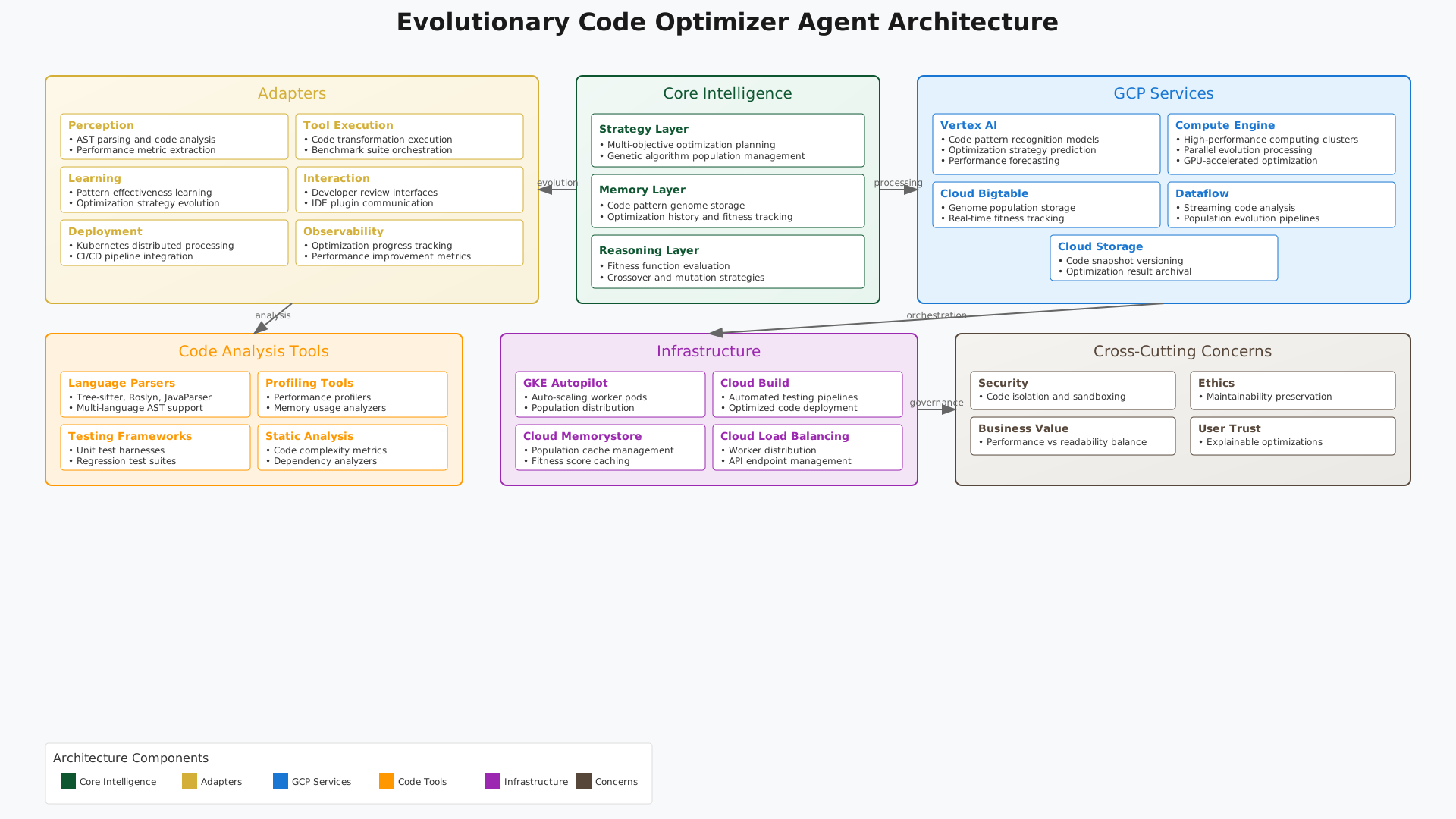

Agent Requirements Document (ARD) for
Evolutionary Code Optimizer
An advanced AI agent that autonomously refactors and optimizes codebases through evolutionary algorithms, reducing technical debt while improving performance and maintainability.
Goal: To continuously evolve codebases by identifying redundancies, consolidating overlapping functions, and optimizing performance through iterative testing and genetic algorithms.
Core Intelligence Layer Requirements
The agent's evolutionary engine that discovers optimization opportunities and evolves code through intelligent mutation and selection.
Strategy Layer
- Task Planning: Structure refactoring campaigns (analyze → identify → generate → test → select → deploy).
- Optimization Goals: Balance code quality metrics (performance, readability, maintainability, test coverage).
- Evolution Strategy: Define mutation rates, population sizes, and selection criteria for code variants.
- Risk Management: Prioritize safe refactorings with gradual rollout strategies.
Memory Layer
- Code Genealogy: Track evolution history of code segments and their performance.
- Pattern Library: Store successful refactoring patterns and anti-patterns to avoid.
- Performance Baselines: Maintain historical benchmarks for regression detection.
- Domain Knowledge: Learn codebase-specific idioms, conventions, and architectural patterns.
Reasoning Layer
- Similarity Detection: Identify functionally equivalent code using semantic analysis.
- Impact Prediction: Estimate effects of refactoring on performance and correctness.
- Fitness Evaluation: Score code variants on multiple quality dimensions.
- Convergence Detection: Recognize when further optimization yields diminishing returns.
Adapters Layer Requirements
Modular interfaces that enable the agent to analyze, modify, test, and deploy optimized code safely and efficiently.
Perception
- Code Analysis: Parse and understand code structure across multiple languages.
- Dependency Mapping: Build comprehensive graphs of code relationships.
- Performance Profiling: Identify hotspots and bottlenecks through dynamic analysis.
Tool Execution
- AST Manipulation: Modify code through abstract syntax tree transformations.
- Test Harness: Execute comprehensive test suites on code variants.
- Benchmark Suite: Run performance tests to measure optimization impact.
- Static Analysis: Verify code quality and detect potential issues.
Learning
- Genetic Learning: Evolve optimization strategies through successful mutations.
- Failure Analysis: Learn from failed refactorings to avoid similar mistakes.
- Transfer Learning: Apply successful patterns from one codebase to another.
Interaction
- Code Review Interface: Present proposed changes with clear before/after comparisons.
- Optimization Dashboard: Real-time visualization of evolution progress.
- Developer Feedback: Incorporate human preferences into fitness functions.
Deployment
- Sandboxed Evolution: Isolated environments for safe code experimentation.
- Gradual Rollout: Progressive deployment with automatic rollback capabilities.
- CI/CD Integration: Seamless integration with existing development pipelines.
Observability
- Evolution Metrics: Track fitness improvements across generations.
- Code Quality Trends: Monitor long-term codebase health indicators.
- Resource Usage: Measure computational cost of optimization campaigns.
Cross-Cutting Concerns Layer Requirements
Global principles ensuring the agent optimizes code safely, ethically, and with measurable business value.
Security
- Vulnerability Prevention: Never introduce security weaknesses during optimization.
- Code Isolation: Ensure refactoring doesn't expose sensitive logic.
- Access Control: Restrict who can approve and deploy optimizations.
Ethics
- Attribution Preservation: Maintain code authorship and licensing information.
- Readability Priority: Don't sacrifice human understanding for minor gains.
- Team Consultation: Respect developer preferences and coding standards.
Business Value
- Performance Gains: 20-50% improvements in critical code paths.
- Maintenance Reduction: 40% less time spent on code understanding.
- Bug Prevention: Eliminate entire classes of errors through consolidation.
Compliance
- Change Management: Full audit trail of all code modifications.
- Testing Requirements: Ensure optimized code meets coverage standards.
- Regulatory Compliance: Preserve required code comments and documentation.
User Trust
- Correctness Guarantee: Formal verification of behavioral equivalence.
- Incremental Changes: Small, reviewable modifications over big rewrites.
- Rollback Ready: One-click reversion to previous code versions.