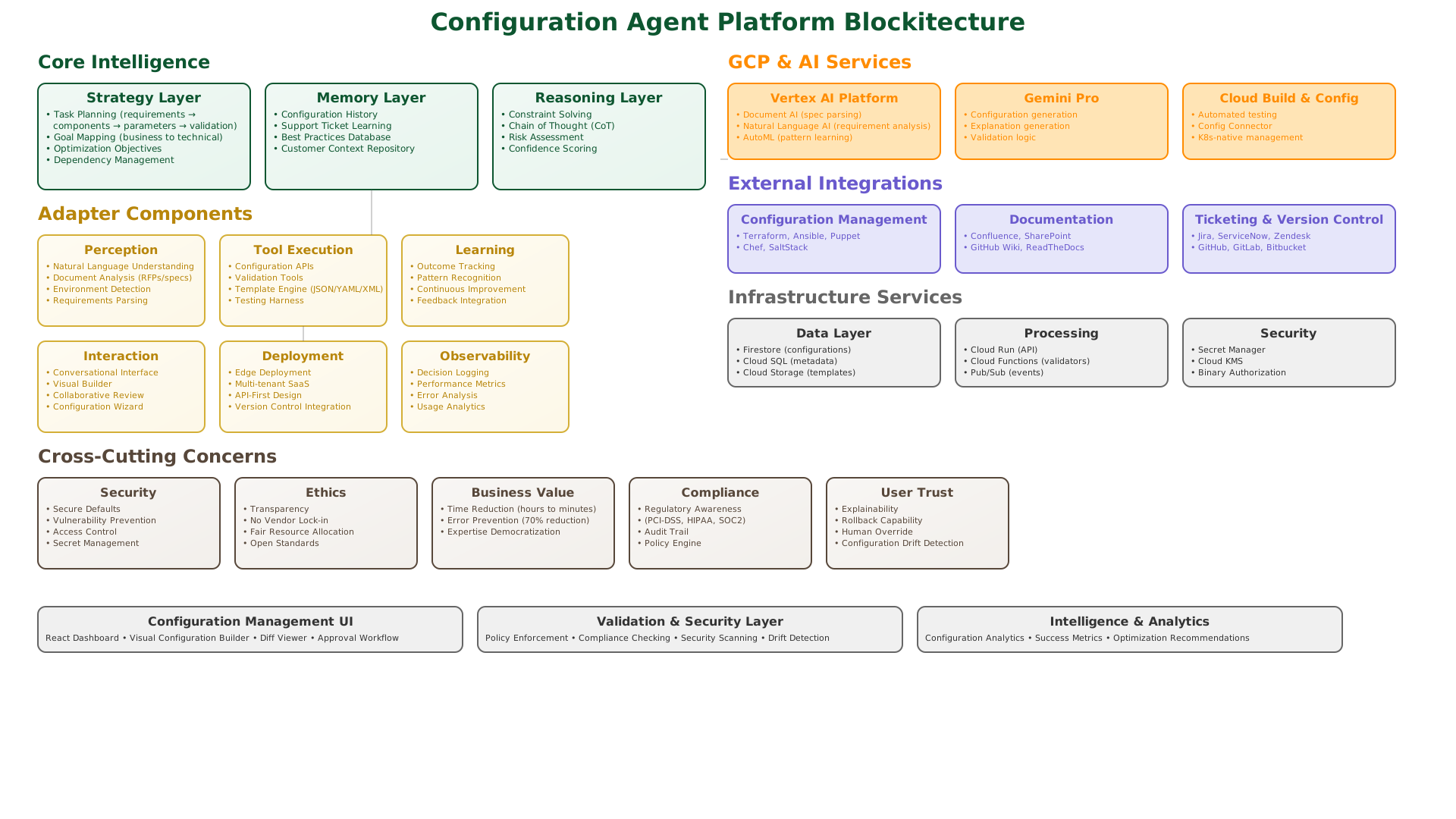

Agent Requirements Document (ARD) for
Configuration Agent
An intelligent AI agent that transforms high-level requirements into precise product configurations, eliminating the need for specialized technical knowledge.
Goal: To democratize product configuration by automatically translating business requirements into optimal technical configurations while ensuring compliance, performance, and security best practices.
Core Intelligence Layer Requirements
The agent's internal "brain," defining its ability to strategize, remember, and reason about configuration decisions and requirements.
Strategy Layer
- Task Planning: Decompose configuration goals into hierarchical steps (requirements analysis → component selection → parameter tuning → validation).
- Goal Mapping: Map business objectives to technical configurations (e.g., "high availability" → load balancing + failover settings).
- Optimization Objectives: Balance competing goals like performance vs. cost, security vs. usability.
- Dependency Management: Track and resolve configuration dependencies and conflicts across components.
Memory Layer
- Configuration History: Store previous configurations and their outcomes for pattern recognition.
- Support Ticket Learning: Index and vectorize historical support tickets to understand common issues.
- Best Practices Database: Maintain a curated knowledge base of configuration patterns and anti-patterns.
- Customer Context: Remember customer-specific requirements, preferences, and constraints.
Reasoning Layer
- Constraint Solving: Apply logical reasoning to resolve conflicting requirements and constraints.
- Chain of Thought (CoT): Generate auditable explanations for each configuration decision.
- Risk Assessment: Evaluate potential security, performance, and reliability risks of configurations.
- Confidence Scoring: Assign confidence levels to recommendations and flag edge cases for human review.
Adapters Layer Requirements
Modular interfaces that enable the agent to understand requirements, generate configurations, and interact with systems and users.
Perception
- Natural Language Understanding: Parse high-level requirements in plain English.
- Document Analysis: Extract configuration needs from RFPs, specs, and diagrams.
- Environment Detection: Automatically discover existing infrastructure and constraints.
Tool Execution
- Configuration APIs: Interface with product configuration management systems.
- Validation Tools: Execute configuration validators and compliance checkers.
- Template Engine: Generate configuration files in multiple formats (JSON, YAML, XML).
- Testing Harness: Automatically test configurations in sandboxed environments.
Learning
- Outcome Tracking: Monitor configuration success rates and support ticket correlations.
- Pattern Recognition: Learn optimal configurations for common use cases.
- Continuous Improvement: Update recommendation models based on field performance data.
Interaction
- Conversational Interface: Interactive Q&A to clarify requirements and explain recommendations.
- Visual Builder: Drag-and-drop interface for configuration visualization.
- Collaborative Review: Multi-stakeholder approval workflows with commenting.
Deployment
- Edge Deployment: Run locally for air-gapped environments.
- Multi-tenant SaaS: Secure isolation between customer configurations.
- API-First Design: RESTful APIs for integration with existing tools.
Observability
- Decision Logging: Complete audit trail of configuration decisions and rationale.
- Performance Metrics: Track configuration generation time and accuracy.
- Error Analysis: Identify patterns in configuration failures or misunderstandings.
Cross-Cutting Concerns Layer Requirements
Global principles ensuring the agent generates secure, compliant, and business-aligned configurations while maintaining user trust.
Security
- Secure Defaults: Always recommend security-hardened configurations by default.
- Vulnerability Prevention: Proactively identify and prevent insecure configuration patterns.
- Access Control: Role-based permissions for configuration generation and approval.
Ethics
- Transparency: Clearly explain trade-offs and implications of configuration choices.
- No Vendor Lock-in: Generate portable configurations that avoid proprietary dependencies.
- Fair Resource Allocation: Ensure configurations don't monopolize shared resources.
Business Value
- Time Reduction: Reduce configuration time from hours to minutes.
- Error Prevention: Decrease configuration-related support tickets by 70%.
- Expertise Democratization: Enable non-experts to configure complex products.
Compliance
- Regulatory Awareness: Ensure configurations meet industry standards (PCI-DSS, HIPAA, SOC2).
- Audit Trail: Maintain immutable logs of all configuration decisions.
- Policy Engine: Enforce organizational configuration policies automatically.
User Trust
- Explainability: Provide clear reasoning for every configuration recommendation.
- Rollback Capability: Easy reversion to previous working configurations.
- Human Override: Always allow expert users to modify AI-generated configurations.