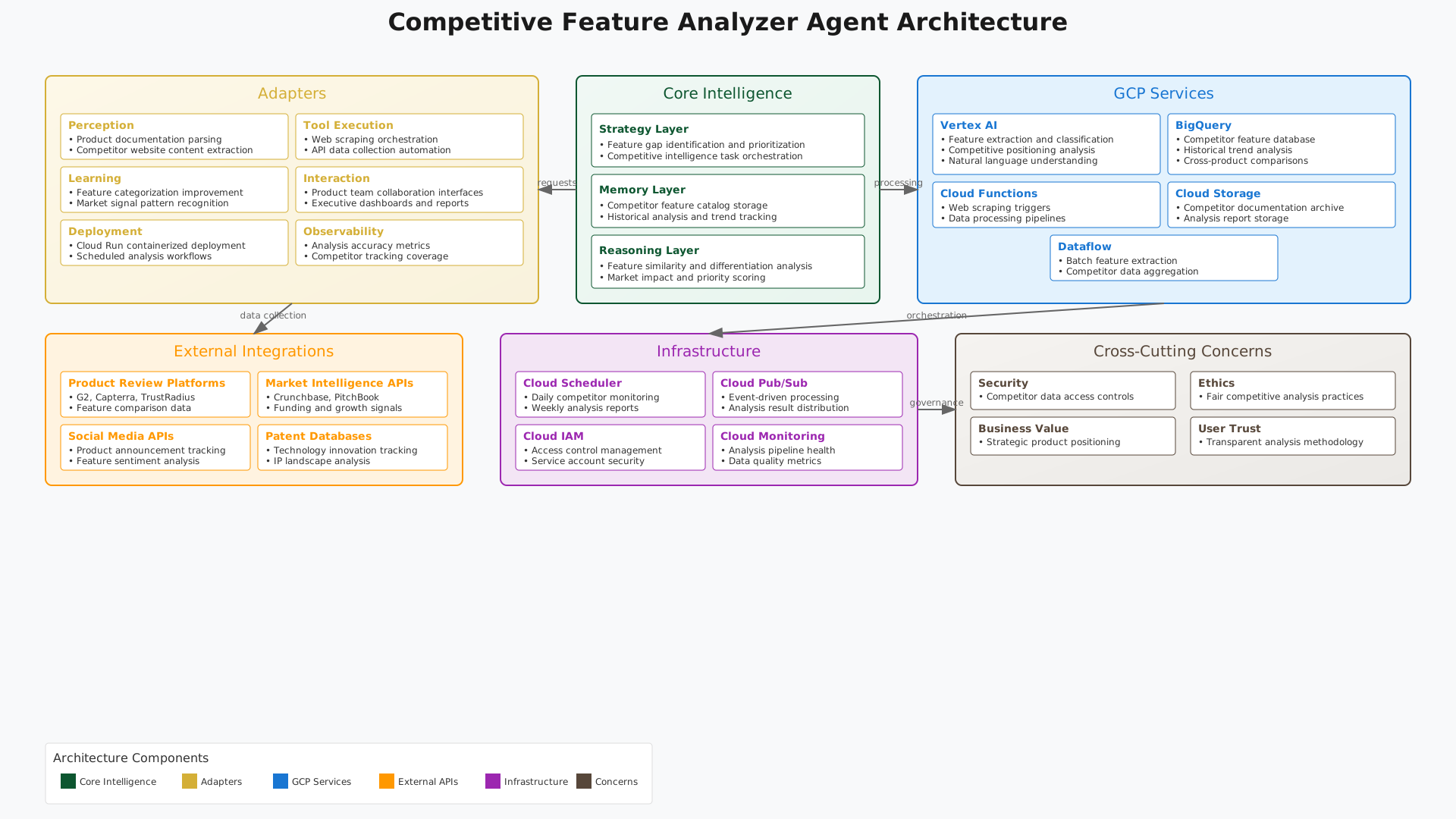

Agent Requirements Document (ARD) for
Competitive Feature Analyzer
An intelligent market intelligence agent that continuously monitors competitive landscapes to identify feature gaps and opportunities that impact sales performance.
Goal: To systematically analyze competitor offerings, correlate feature gaps with lost sales, and provide actionable intelligence for product strategy and roadmap prioritization.
Core Intelligence Layer Requirements
The agent's analytical brain that discovers, evaluates, and prioritizes competitive feature gaps based on market impact.
Strategy Layer
- Task Planning: Orchestrate intelligence gathering (monitor → analyze → correlate → prioritize → recommend).
- Goal Mapping: Link feature gaps to business metrics (win/loss rates, deal size, customer churn).
- Market Segmentation: Analyze feature importance by industry, company size, and use case.
- Competitive Positioning: Map feature parity, advantages, and disadvantages across competitor matrix.
Memory Layer
- Feature Evolution: Track how competitor features evolve over time and market response.
- Win/Loss Database: Detailed repository of deal outcomes with feature-related factors.
- Customer Feedback: Indexed requests and complaints mentioning competitor features.
- Market Trends: Historical patterns of feature adoption across the industry.
Reasoning Layer
- Impact Analysis: Quantify revenue impact of specific feature gaps using statistical models.
- Correlation Engine: Connect lost deals to missing features with confidence scoring.
- Trend Prediction: Forecast which features will become table stakes vs. differentiators.
- Build vs. Buy Analysis: Evaluate options for closing identified feature gaps.
Adapters Layer Requirements
Modular interfaces enabling the agent to gather competitive intelligence, analyze market dynamics, and deliver strategic insights.
Perception
- Web Intelligence: Monitor competitor websites, release notes, and documentation.
- Social Listening: Analyze social media, forums, and review sites for feature mentions.
- Sales Intelligence: Process CRM data, call recordings, and deal notes for insights.
Tool Execution
- Web Scraping: Automated extraction of competitor feature information.
- NLP Pipeline: Extract features from unstructured text in sales notes and reviews.
- Comparison Engine: Generate detailed feature comparison matrices.
- Impact Calculator: Quantify potential revenue uplift from feature additions.
Learning
- Pattern Recognition: Learn which features correlate strongest with sales success.
- Market Evolution: Adapt to changing feature importance over time.
- Accuracy Improvement: Refine predictions based on actual win/loss outcomes.
Interaction
- Executive Briefings: Auto-generated competitive intelligence reports.
- Sales Enablement: Real-time feature comparison tools for sales teams.
- Product Planning: Interactive roadmap impact analysis.
Deployment
- Continuous Monitoring: 24/7 competitive intelligence gathering.
- API Integration: Connect with CRM, product management, and BI tools.
- Multi-region Support: Analyze competitors across different geographic markets.
Observability
- Intelligence Quality: Track accuracy of competitive insights and predictions.
- Coverage Metrics: Monitor completeness of competitor tracking.
- Alert Management: Notify stakeholders of significant competitive moves.
Cross-Cutting Concerns Layer Requirements
Global principles ensuring the agent operates ethically while delivering actionable competitive intelligence.
Security
- Data Protection: Secure storage of sensitive competitive intelligence.
- Access Control: Strict permissions for competitive analysis data.
- Source Protection: Anonymize internal sources of competitive information.
Ethics
- Legal Compliance: Only use publicly available information sources.
- Fair Competition: Avoid anti-competitive practices or industrial espionage.
- Accuracy Standards: Verify information from multiple sources before reporting.
Business Value
- Win Rate Impact: Increase competitive win rates by 25%+.
- Product ROI: Focus development on high-impact features.
- Sales Efficiency: Reduce time spent on competitive analysis by 80%.
Compliance
- Antitrust Compliance: Ensure analysis methods comply with competition laws.
- Data Sources: Document all information sources for audit trails.
- Retention Policies: Automatic expiration of outdated competitive data.
User Trust
- Confidence Levels: Clearly indicate certainty of competitive insights.
- Source Attribution: Show where competitive information originated.
- Balanced Analysis: Present both threats and opportunities objectively.