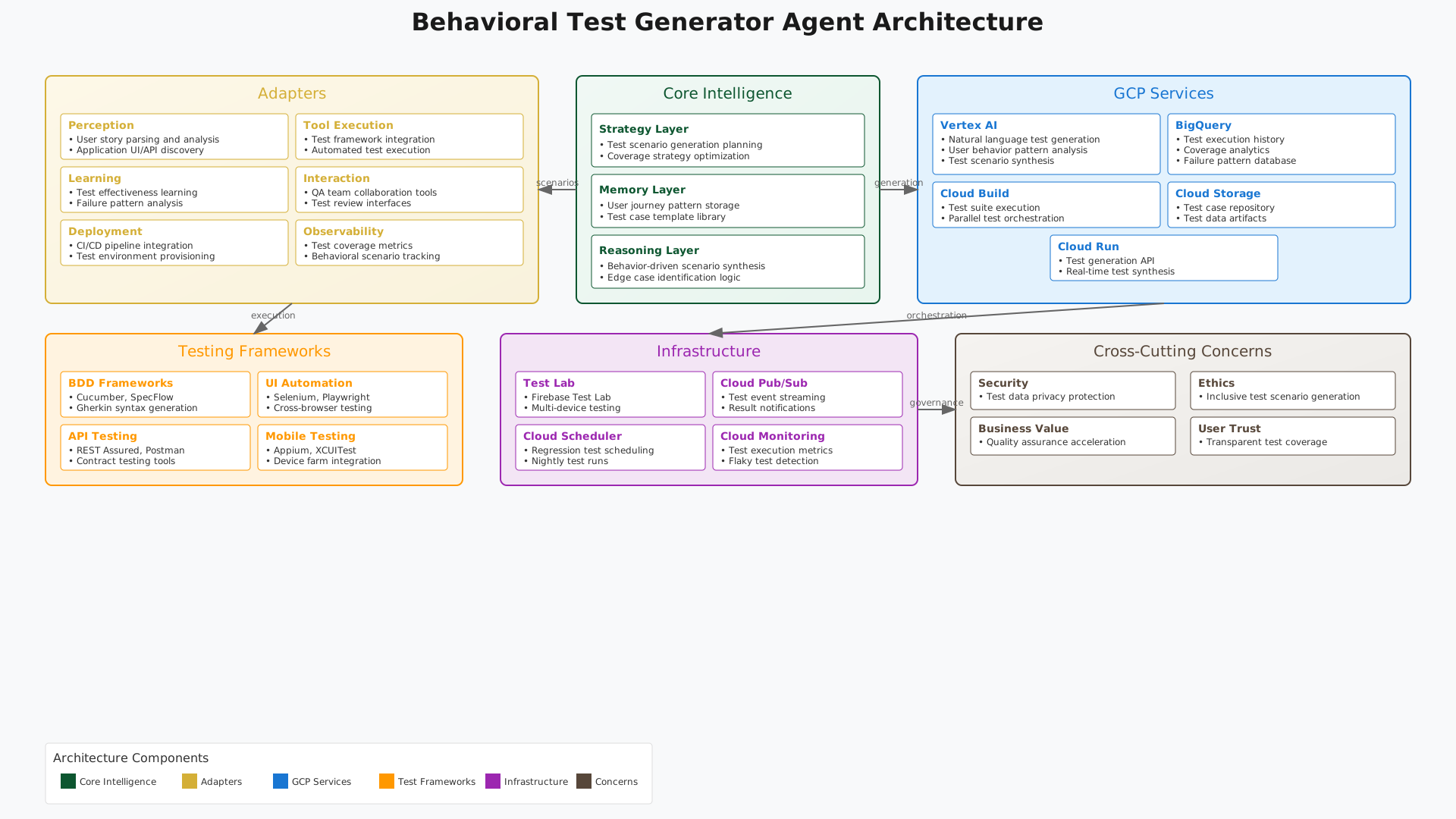

Agent Requirements Document (ARD) for
Behavioral Test Generator
An intelligent testing agent that analyzes code behavior and automatically generates comprehensive test suites, dramatically improving code quality and reliability.
Goal: To achieve comprehensive test coverage by understanding code intent, generating meaningful test cases, and ensuring all edge cases and behaviors are properly validated.
Core Intelligence Layer Requirements
The agent's analytical core that understands code behavior, generates test strategies, and ensures comprehensive coverage.
Strategy Layer
- Task Planning: Orchestrate test generation workflow (analyze → understand → generate → validate → refine).
- Coverage Strategy: Balance unit, integration, and behavioral test generation based on code complexity.
- Test Prioritization: Focus on critical paths, complex logic, and high-risk code sections first.
- Quality Goals: Optimize for meaningful assertions, not just coverage metrics.
Memory Layer
- Test Patterns: Store successful test structures and patterns for reuse.
- Domain Knowledge: Learn project-specific testing conventions and frameworks.
- Bug History: Remember past bugs to generate regression tests.
- Coverage Maps: Track tested vs. untested code paths across the codebase.
Reasoning Layer
- Behavioral Analysis: Infer expected behavior from code structure and comments.
- Edge Case Detection: Identify boundary conditions and corner cases automatically.
- Test Oracle Generation: Determine correct expected outputs for test assertions.
- Mutation Analysis: Verify test quality by checking if tests catch injected bugs.
Adapters Layer Requirements
Modular interfaces that enable the agent to understand code, generate tests, and integrate with development workflows.
Perception
- Code Understanding: Parse and analyze code across multiple programming languages.
- Documentation Analysis: Extract behavioral specifications from comments and docs.
- Human Input Processing: Understand natural language descriptions of expected behavior.
Tool Execution
- Test Framework APIs: Generate tests for Jest, pytest, JUnit, and other frameworks.
- Coverage Analysis: Execute tests and measure code coverage comprehensively.
- Mock Generation: Create appropriate mocks and stubs for dependencies.
- Property Testing: Generate property-based tests for complex invariants.
Learning
- Test Effectiveness: Learn which test types catch the most bugs.
- Pattern Recognition: Identify common testing patterns in the codebase.
- Feedback Integration: Improve based on developer corrections and preferences.
Interaction
- Test Review Interface: Present generated tests with clear explanations.
- Interactive Refinement: Allow developers to guide test generation through examples.
- Coverage Visualization: Show untested code paths and suggest tests.
Deployment
- IDE Integration: Generate tests directly within development environments.
- CI/CD Pipeline: Automatically generate tests for new code changes.
- Incremental Generation: Add tests progressively without disrupting workflow.
Observability
- Test Quality Metrics: Track assertion density and mutation score.
- Generation Performance: Monitor time to generate and test effectiveness.
- Bug Detection Rate: Measure how many bugs generated tests catch.
Cross-Cutting Concerns Layer Requirements
Global principles ensuring the agent generates reliable, maintainable tests that add real value to development.
Security
- Secure Test Data: Generate test data that doesn't expose sensitive information.
- Vulnerability Testing: Include security-focused test cases automatically.
- Access Control: Ensure tests don't bypass authentication mechanisms.
Ethics
- Test Transparency: Generated tests should be readable and understandable.
- No Over-fitting: Avoid generating tests that only pass current implementation.
- Fair Testing: Ensure tests don't discriminate or contain biased data.
Business Value
- Bug Reduction: Catch 60%+ more bugs before production.
- Development Speed: Reduce test writing time by 80%.
- Confidence Boost: Enable fearless refactoring with comprehensive tests.
Compliance
- Coverage Standards: Meet organizational test coverage requirements.
- Documentation: Generate test documentation for audit purposes.
- Traceability: Link tests to requirements and specifications.
User Trust
- Test Clarity: Generate self-documenting tests with clear intent.
- No False Positives: Ensure generated tests are reliable and deterministic.
- Developer Control: Easy to modify or reject generated tests.