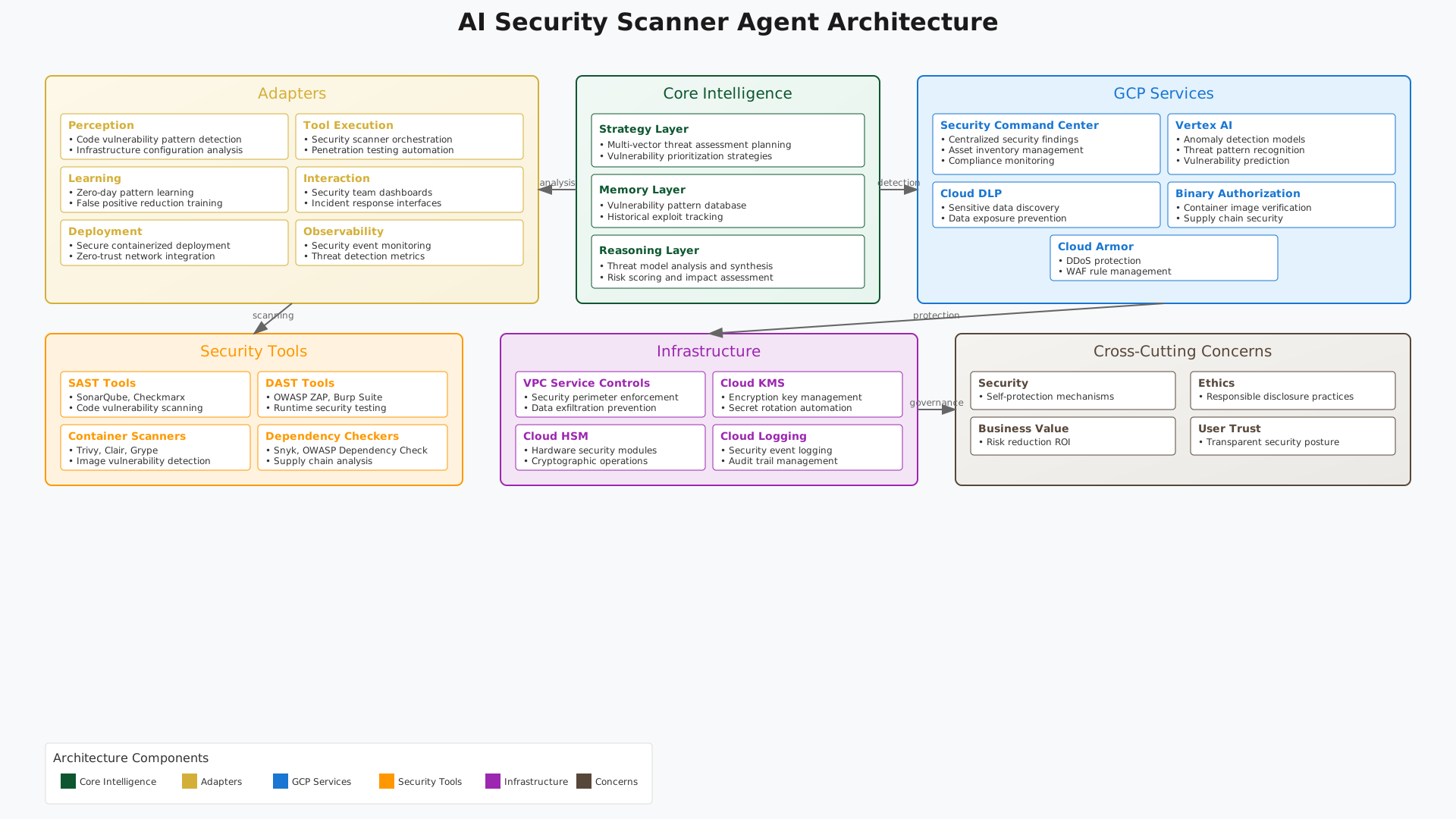

Agent Requirements Document (ARD) for
AI Security Scanner
An advanced security agent that continuously monitors code for vulnerabilities, design flaws, and security risks while providing real-time remediation guidance.
Goal: To proactively identify and remediate security vulnerabilities across the entire software development lifecycle, from code commit to production deployment.
Core Intelligence Layer Requirements
The agent's security intelligence engine that identifies vulnerabilities, assesses risks, and recommends remediation strategies.
Strategy Layer
- Task Planning: Orchestrate security analysis workflow (scan → detect → prioritize → remediate → verify).
- Risk Prioritization: Rank vulnerabilities by exploitability, impact, and exposure.
- Defense Strategy: Layer security checks across static, dynamic, and runtime analysis.
- Compliance Mapping: Align security checks with regulatory requirements (OWASP, CWE, etc.).
Memory Layer
- Vulnerability Database: Comprehensive CVE and zero-day threat intelligence.
- Attack Patterns: Store known exploitation techniques and attack vectors.
- Remediation History: Track successful fixes and their effectiveness over time.
- False Positive Learning: Remember project-specific false positives to reduce noise.
Reasoning Layer
- Threat Modeling: Analyze attack surfaces and potential exploitation paths.
- Context Analysis: Understand security implications based on code context.
- Fix Generation: Propose secure code alternatives that maintain functionality.
- Impact Assessment: Evaluate potential damage from successful exploits.
Adapters Layer Requirements
Modular interfaces enabling the agent to scan code, detect vulnerabilities, and integrate with security workflows.
Perception
- Code Analysis: Deep semantic understanding of code across languages.
- Dependency Scanning: Analyze third-party libraries for known vulnerabilities.
- Configuration Review: Detect insecure settings in infrastructure-as-code.
Tool Execution
- SAST Engine: Static analysis for code-level vulnerability detection.
- DAST Integration: Dynamic testing of running applications.
- Secret Scanner: Detect exposed credentials and API keys.
- Patch Generator: Automatically create secure code fixes.
Learning
- Threat Evolution: Continuously update with new attack techniques.
- Fix Effectiveness: Learn which remediation approaches work best.
- Custom Rules: Adapt to organization-specific security policies.
Interaction
- Developer IDE: Real-time security feedback during coding.
- PR Comments: Automated security reviews on pull requests.
- Security Dashboard: Executive view of security posture and trends.
Deployment
- Shift-Left Integration: Embed in early development stages.
- CI/CD Pipeline: Automated security gates in build process.
- Runtime Protection: Deploy security monitors in production.
Observability
- Security Metrics: Track vulnerability discovery and fix rates.
- Scan Performance: Monitor analysis speed and accuracy.
- Threat Intelligence: Real-time updates on emerging threats.
Cross-Cutting Concerns Layer Requirements
Global principles ensuring the agent provides accurate, actionable security intelligence without disrupting development.
Security
- Self-Protection: Prevent the scanner from becoming an attack vector.
- Secure Storage: Encrypt vulnerability findings and remediation data.
- Access Control: Role-based access to security findings.
Ethics
- Responsible Disclosure: Handle zero-day discoveries ethically.
- Privacy Protection: Don't expose sensitive data in reports.
- Balanced Reporting: Avoid fear-mongering while ensuring urgency.
Business Value
- Risk Reduction: 90%+ reduction in production vulnerabilities.
- Cost Savings: Fix vulnerabilities 100x cheaper in development.
- Compliance: Automatic compliance with security standards.
Compliance
- Regulatory Alignment: Map findings to compliance requirements.
- Audit Trail: Complete history of security scans and remediations.
- Evidence Collection: Generate compliance attestation reports.
User Trust
- Low False Positives: High accuracy to maintain developer trust.
- Clear Guidance: Actionable fixes, not just problem identification.
- Learning Curve: Educational explanations for security issues.