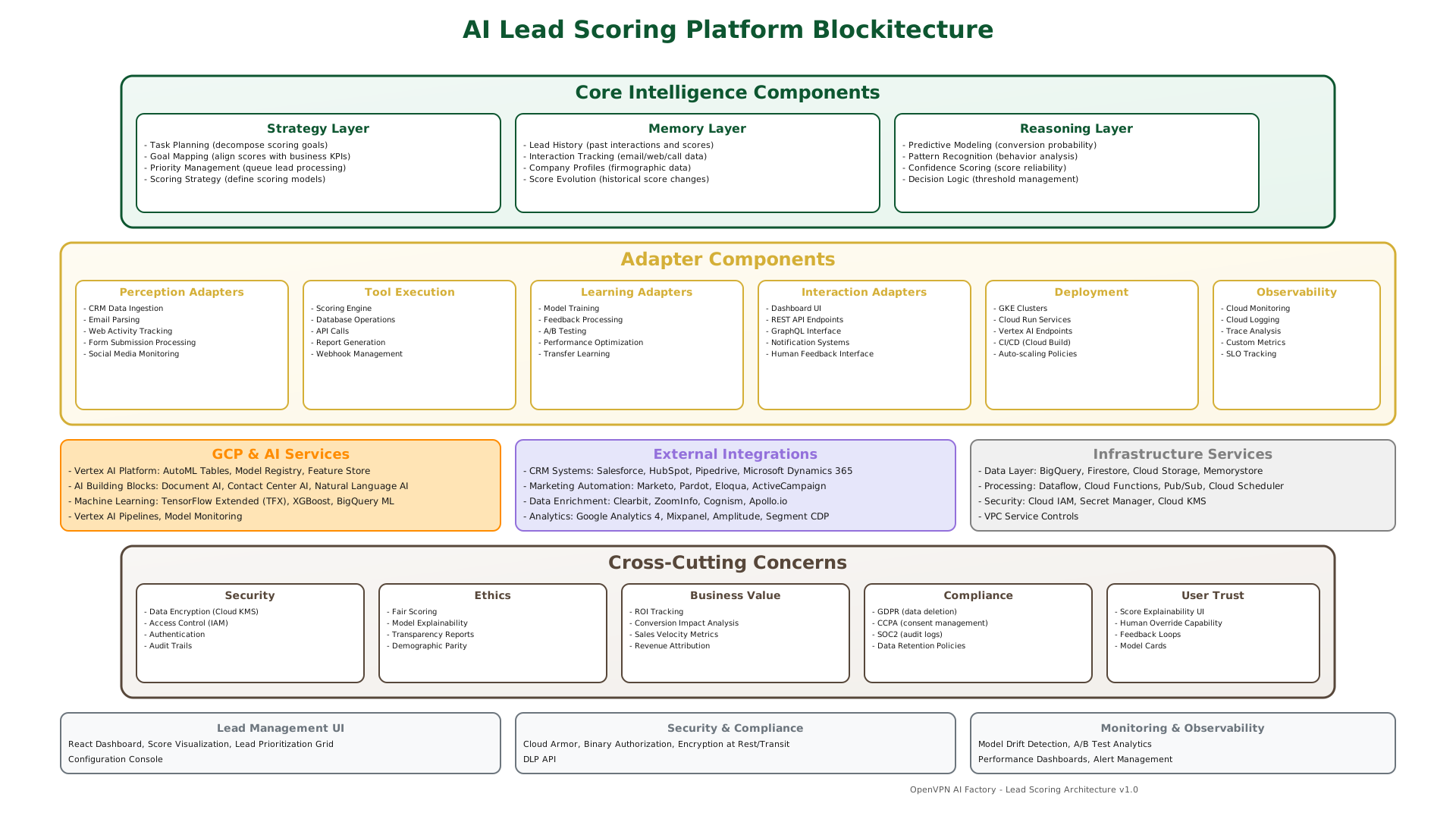

Agent Requirements Document (ARD) for
AI Lead Scoring
An intelligent lead prioritization agent that automatically scores and ranks prospects based on conversion probability, using advanced analytics to optimize sales resource allocation and maximize pipeline efficiency.
Goal: To enhance sales productivity by accurately identifying the highest-value prospects and providing sales teams with data-driven lead prioritization and engagement recommendations.
Core Intelligence Layer Requirements
The agent's internal "brain," enabling sophisticated lead assessment, predictive scoring, and strategic prioritization based on multi-dimensional prospect analysis.
Strategy Layer
- Multi-Dimensional Scoring Framework: Integrate firmographic data, behavioral signals, engagement history, and buying intent indicators into comprehensive lead scores.
- Dynamic Prioritization Logic: Adjust lead scoring criteria based on market conditions, sales performance, and changing business priorities.
- Segment-Specific Modeling: Develop customized scoring models for different market segments, product lines, and customer types.
- Sales Resource Optimization: Align lead scoring with sales team capacity and expertise to maximize conversion efficiency.
Memory Layer
- Historical Conversion Patterns: Store comprehensive records of lead characteristics that historically correlate with successful conversions.
- Sales Outcome Tracking: Maintain detailed win/loss analysis to continuously refine scoring accuracy and model performance.
- Behavioral Signal Library: Build knowledge base of engagement patterns, content preferences, and buying journey indicators.
- Score Evolution History: Track how lead scores change over time and their correlation with eventual outcomes.
Reasoning Layer
- Predictive Conversion Modeling: Analyze lead characteristics against historical data to predict conversion probability and timeline.
- Intent Signal Interpretation: Assess buying intent signals from content engagement, research behavior, and competitive evaluation activities.
- Risk-Adjusted Scoring: Factor in deal complexity, competitive pressure, and potential obstacles to provide realistic conversion assessments.
- ROI-Based Prioritization: Balance lead scoring with potential deal value and sales effort required for optimal resource allocation.
Adapters Layer Requirements
Modular interfaces enabling comprehensive lead data integration, real-time scoring, and seamless workflow integration with sales and marketing systems.
Perception
- Multi-Source Data Integration: Collect lead information from CRM systems, marketing automation platforms, website analytics, and external data providers.
- Behavioral Analytics: Monitor website engagement, content downloads, email interactions, and event participation patterns.
- Firmographic Intelligence: Analyze company size, industry, technology stack, and growth indicators for institutional scoring.
- Intent Signal Detection: Identify research behaviors, competitor evaluation, and purchase timeline indicators from digital footprints.
Tool Execution
- Real-Time Scoring Engine: Execute machine learning models to generate and update lead scores as new data becomes available.
- CRM Integration: Automatically update lead scores in Salesforce, HubSpot, and other CRM systems with enriched prospect intelligence.
- Marketing Automation Sync: Trigger nurture campaigns, email sequences, and content recommendations based on lead scores.
- Sales Workflow Integration: Generate prioritized lead lists, task assignments, and follow-up recommendations for sales teams.
Learning
- Model Performance Optimization: Continuously improve scoring accuracy by analyzing conversion outcomes and adjusting model weights.
- Feature Importance Learning: Identify which lead characteristics most strongly predict conversion success in different scenarios.
- Segment-Specific Refinement: Develop specialized scoring approaches for different customer segments and market conditions.
- Sales Feedback Integration: Incorporate sales team feedback on lead quality to enhance scoring relevance and accuracy.
Interaction
- Sales Dashboard: Provide real-time dashboards with prioritized lead queues, score explanations, and recommended actions.
- Lead Intelligence Reports: Generate detailed prospect profiles with scoring rationale and engagement recommendations.
- Marketing Alignment Interface: Share lead quality insights with marketing teams for campaign optimization and lead generation improvement.
- Performance Analytics: Deliver insights on scoring accuracy, conversion trends, and sales efficiency improvements.
Deployment
- High-Volume Processing: Handle large lead volumes with real-time scoring updates and batch processing capabilities.
- Multi-Platform Integration: Deploy across various sales and marketing technology stacks with flexible API connectivity.
- Scalable Analytics Infrastructure: Support growing data volumes and increasing model complexity as business scales.
- Real-Time Decision Support: Provide instant lead prioritization for time-sensitive sales opportunities and inbound leads.
Observability
- Scoring Accuracy Metrics: Track prediction accuracy, false positive rates, and model performance across different lead segments.
- Sales Impact Analytics: Monitor improvements in conversion rates, sales cycle length, and pipeline quality.
- Model Drift Detection: Identify when scoring models need retraining due to changing market conditions or customer behavior.
- Business Value Measurement: Track ROI improvements from enhanced lead prioritization and sales efficiency gains.
Cross-Cutting Concerns Layer Requirements
Global principles ensuring the agent provides fair, accurate, and actionable lead scoring while maintaining data privacy and delivering measurable business value.
Security
- Lead Data Protection: Secure prospect information, behavioral data, and scoring models with enterprise-grade encryption and access controls.
- Privacy-Compliant Analytics: Ensure lead tracking and scoring comply with GDPR, CCPA, and other privacy regulations.
- Secure Data Integration: Implement secure connections to CRM systems, marketing platforms, and external data sources.
- Model Security: Protect proprietary scoring algorithms and prevent unauthorized access to competitive intelligence.
Ethics
- Fair Scoring Practices: Ensure lead scoring doesn't discriminate based on protected characteristics or introduce unfair bias.
- Transparent Methodology: Provide clear explanations of scoring criteria and factors influencing lead prioritization.
- Prospect Privacy Respect: Balance lead intelligence gathering with respect for prospect privacy and consent preferences.
- Accurate Representation: Ensure scoring accurately reflects conversion probability without misleading sales teams.
Business Value
- Sales Productivity Enhancement: Measure improvements in sales efficiency, conversion rates, and revenue per sales representative.
- Pipeline Quality Optimization: Track improvements in lead-to-opportunity conversion and overall pipeline health.
- Resource Allocation Efficiency: Optimize sales resource allocation by focusing efforts on highest-probability prospects.
- Revenue Predictability: Improve revenue forecasting accuracy through better understanding of pipeline quality.
Compliance
- Data Usage Compliance: Ensure all lead data collection and analysis complies with applicable privacy and data protection laws.
- Marketing Regulation Adherence: Maintain compliance with email marketing, lead generation, and digital advertising regulations.
- CRM Data Governance: Follow established data governance policies for CRM data quality and management.
- Audit Trail Maintenance: Keep comprehensive records of scoring decisions and model changes for compliance reviews.
User Trust
- Score Explainability: Provide clear explanations of why specific leads receive high or low scores with supporting evidence.
- Prediction Confidence: Communicate the confidence level and reliability of lead scoring predictions to sales teams.
- Continuous Validation: Regularly validate scoring accuracy against actual outcomes and adjust models accordingly.
- Sales Team Empowerment: Enable sales representatives to understand and act on lead intelligence effectively.