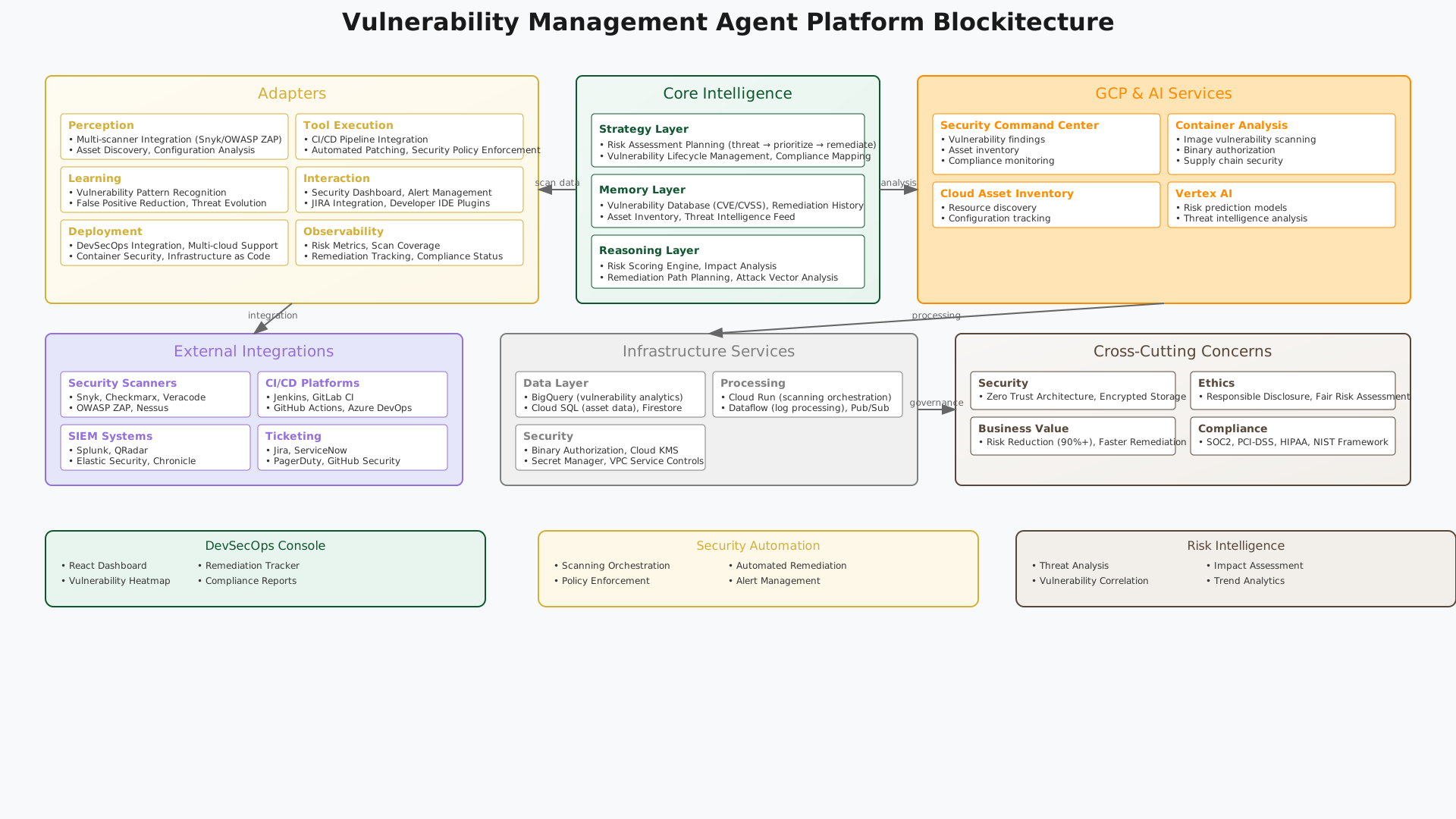

Agent Requirements Document (ARD) for
Vulnerability Management Agent
An intelligent DevSecOps agent that seamlessly integrates comprehensive security scanning into CI/CD pipelines with real-time CVE correlation, CVSS scoring, and threat intelligence integration for proactive vulnerability management.
Goal: To embed continuous security validation throughout the software development lifecycle by automatically correlating vulnerabilities with threat intelligence, providing contextual risk assessment, and orchestrating remediation workflows within existing development tools.
Core Intelligence Layer Requirements
The agent's security-focused "brain," combining deep vulnerability analysis expertise with threat intelligence correlation to provide contextual risk assessment and automated remediation guidance.
Strategy Layer
- Risk-Based Prioritization: Decompose vulnerability landscape into contextual risk tiers based on CVSS scores, exploit availability, and business impact assessment.
- Pipeline Integration Strategy: Align security scanning with development workflows to minimize friction while maximizing coverage and detection accuracy.
- Remediation Orchestration: Plan coordinated response strategies considering fix availability, deployment windows, and operational dependencies.
- Threat Intelligence Correlation: Map discovered vulnerabilities against active threat campaigns and exploit availability for dynamic risk assessment.
Memory Layer
- Vulnerability Knowledge Base: Maintain comprehensive database of CVE details, CVSS metrics, patch availability, and remediation patterns across the software portfolio.
- Threat Intelligence Repository: Store and correlate threat actor TTPs, exploit trends, and vulnerability exploitation patterns for contextual risk assessment.
- Scan History Analytics: Track vulnerability lifecycle from discovery through remediation to identify patterns and optimize scanning effectiveness.
- Baseline Security Posture: Remember normal security state across environments to detect deviations and emerging threat vectors.
Reasoning Layer
- Multi-Factor Risk Analysis: Execute sophisticated risk calculations considering vulnerability severity, exploitability, threat landscape, and business context simultaneously.
- Chain of Vulnerability Reasoning: Provide detailed explanations for risk assessments, remediation priorities, and security recommendations with supporting evidence.
- Impact Dependency Analysis: Understand software dependencies and transitive vulnerability relationships to assess cascading security implications.
- Remediation Path Optimization: Calculate optimal fix strategies considering patch availability, testing requirements, and deployment complexity.
Adapters Layer Requirements
Specialized interfaces enabling comprehensive integration with CI/CD pipelines, vulnerability databases, and threat intelligence sources to deliver continuous security validation throughout the development lifecycle.
Perception
- Multi-Source Vulnerability Detection: Integrate with SAST, DAST, SCA, and container scanning tools to provide comprehensive vulnerability coverage across code, dependencies, and infrastructure.
- Threat Intelligence Ingestion: Process feeds from NVD, MITRE ATT&CK, commercial threat intelligence providers, and security research communities for contextual risk assessment.
- CI/CD Pipeline Monitoring: Analyze build artifacts, dependency manifests, and deployment configurations to identify security-relevant changes and potential vulnerabilities.
Tool Execution
- CI/CD Integration: Execute security scans through Jenkins, GitHub Actions, GitLab CI, and Azure DevOps with dynamic configuration based on code changes and risk assessment.
- Vulnerability Scanning Orchestration: Coordinate multiple security tools including Snyk, Veracode, Checkmarx, and OWASP ZAP with intelligent scan selection and optimization.
- Remediation Automation: Generate pull requests with security patches, trigger dependency updates, and coordinate fix deployments across development environments.
- CVSS Calculation & Scoring: Implement dynamic CVSS scoring with environmental and temporal metrics specific to organizational context and threat landscape.
Learning
- False Positive Reduction: Learn from developer feedback and vulnerability validation to improve scanning accuracy and reduce alert fatigue.
- Risk Scoring Refinement: Continuously improve risk assessment models based on actual exploit activity and successful remediation outcomes.
- Threat Pattern Recognition: Identify emerging vulnerability patterns and attack vectors to proactively enhance detection capabilities.
Interaction
- Developer-Centric Dashboards: Provide intuitive vulnerability management interfaces integrated with IDEs, pull request workflows, and development tools.
- Security Team Orchestration: Route high-severity vulnerabilities through security team workflows with detailed analysis and remediation recommendations.
- Executive Risk Reporting: Generate strategic security posture reports with trend analysis, compliance status, and business risk assessment.
Deployment
- Cloud-Native Architecture: Deploy across AWS, GCP, and Azure with native integration to cloud security services and container orchestration platforms.
- Hybrid Environment Support: Coordinate security scanning across on-premises and cloud infrastructure with unified vulnerability management.
- Scalable Scanning Infrastructure: Dynamically scale scanning resources based on code velocity and repository activity with intelligent resource allocation.
Observability
- Security Metrics Dashboard: Track vulnerability discovery rates, remediation times, security posture trends, and compliance status across all software assets.
- Threat Intelligence Analytics: Monitor threat landscape changes and their impact on organizational risk profile with predictive threat modeling.
- Performance Optimization: Analyze scanning efficiency, tool effectiveness, and developer workflow impact to optimize security operations.
Cross-Cutting Concerns Layer Requirements
Enterprise security principles ensuring the agent operates with the highest security standards while delivering comprehensive vulnerability management without compromising development velocity or operational security.
Security
- Secure Scanning Operations: All vulnerability scanning and analysis operations use encrypted channels with secure credential management and minimal privilege access.
- Threat Intelligence Protection: Safeguard sensitive threat intelligence data and vulnerability details from unauthorized access while enabling effective security operations.
- Zero-Trust Scanning: Apply zero-trust principles to scanning infrastructure with continuous verification and comprehensive audit logging.
Ethics
- Responsible Disclosure: Ensure vulnerability information is handled responsibly with appropriate disclosure timelines and stakeholder notification.
- Privacy-Preserving Analysis: Protect sensitive code and configuration data during vulnerability analysis while maintaining security effectiveness.
- Balanced Security Posture: Balance security requirements with development productivity to avoid creating unsustainable security friction.
Business Value
- Risk Reduction ROI: Quantify security risk reduction and potential cost avoidance from prevented security incidents and improved compliance posture.
- Development Velocity Protection: Measure and optimize the balance between security coverage and development team productivity.
- Compliance Efficiency: Track cost savings from automated compliance reporting and reduced manual security assessment overhead.
Compliance
- Regulatory Adherence: Ensure vulnerability management practices comply with relevant regulations (SOX, PCI-DSS, HIPAA, GDPR) and industry frameworks.
- Audit Documentation: Provide comprehensive audit trails of vulnerability discovery, risk assessment, and remediation activities for compliance reporting.
- Framework Alignment: Align with security frameworks (NIST, ISO27001, CIS Controls) and industry best practices for vulnerability management.
User Trust
- Explainable Risk Assessment: Provide clear explanations for vulnerability risk scores and remediation recommendations to build trust with development teams.
- Consistent Security Standards: Maintain predictable and fair security assessment criteria across all software assets and development teams.
- Developer Empowerment: Enable development teams to understand and address security issues with clear guidance and actionable recommendations.