
Agent Requirements Document (ARD) for
TOM Registry Agent
Enterprise AI Agent Service Discovery and Central Management Hub for Distributed Agent Ecosystems
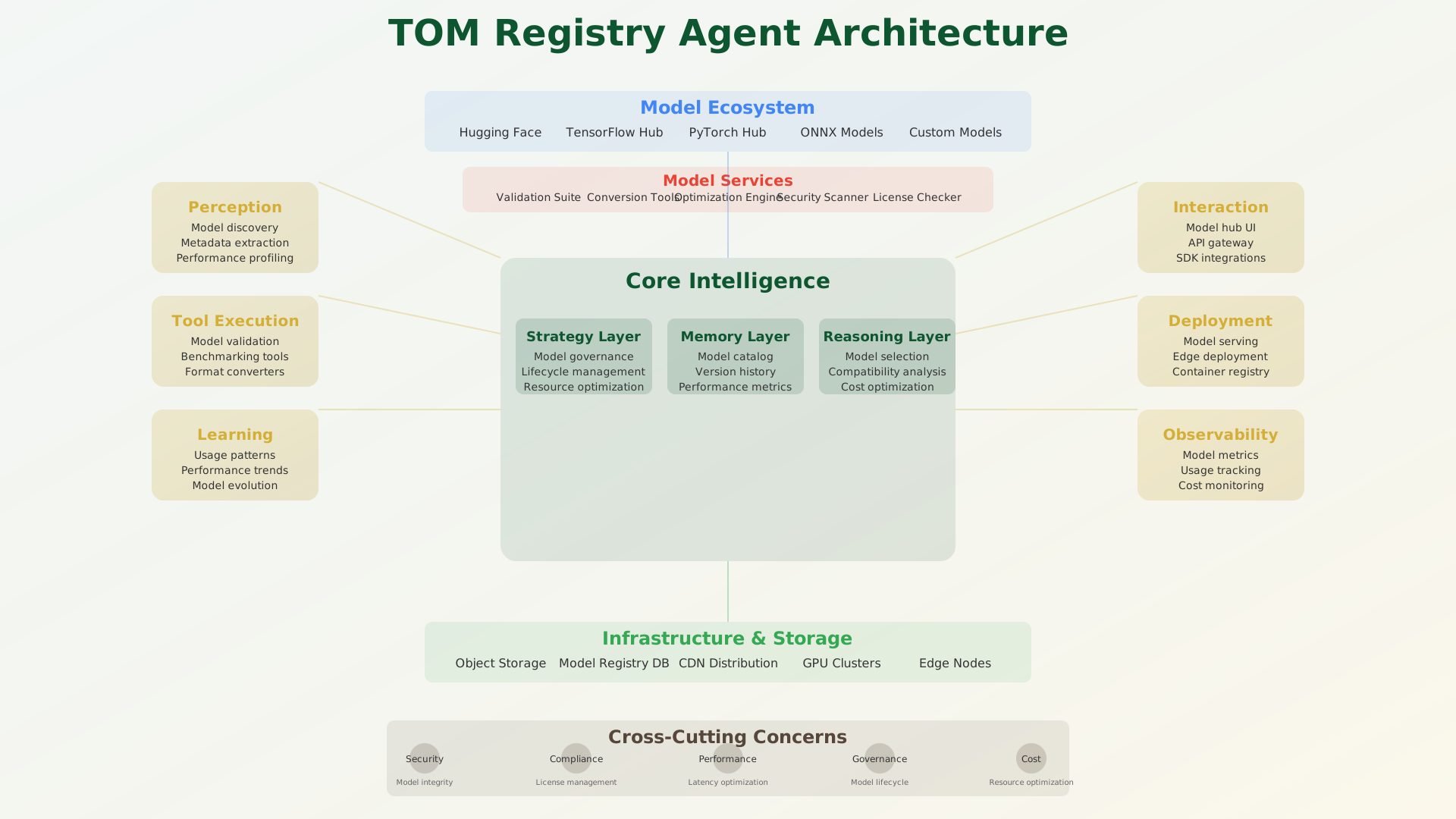
Mission: Provide comprehensive service discovery, lifecycle management, and intelligent orchestration for enterprise AI agent deployments using Target Operating Model (TOM) principles and cloud-native technologies.
Core Intelligence Layer Requirements
Advanced orchestration intelligence for managing complex AI agent ecosystems with enterprise-grade reliability and scalability.

Strategy Layer
- Service Discovery Strategy: Intelligent agent discovery using DNS-SD, Consul, and Kubernetes service meshes
- Load Balancing Logic: Dynamic traffic distribution based on agent health, capacity, and specialization
- Deployment Orchestration: Strategic placement of agents across infrastructure based on workload requirements
- Capacity Planning: Predictive scaling decisions based on historical usage patterns and real-time demand
- Multi-Cloud Strategy: Intelligent workload distribution across cloud providers for optimal cost and performance

Memory Layer
- Agent Registry Database: Comprehensive catalog of all registered agents with capabilities, versions, and metadata
- Service History: Historical performance data, deployment records, and configuration changes
- Dependency Mapping: Graph-based storage of inter-agent dependencies and communication patterns
- Configuration Management: Versioned configuration storage with rollback capabilities and change tracking
- Knowledge Graph: Semantic understanding of agent relationships, capabilities, and business contexts
Reasoning Layer
- Health Assessment: Multi-dimensional health scoring combining performance, availability, and error rates
- Optimization Algorithms: Resource allocation optimization using constraint programming and machine learning
- Failure Analysis: Root cause analysis for service disruptions with automated remediation suggestions
- Compatibility Reasoning: Version compatibility analysis and upgrade path recommendations
- Security Analysis: Continuous security posture assessment and vulnerability impact analysis
Adapters Layer Requirements
Cloud-native integration adapters for comprehensive infrastructure management, monitoring, and enterprise service integration.

Perception
- Infrastructure Scanning: Continuous discovery of new agents and services across multi-cloud environments
- Metadata Extraction: Automatic parsing of service metadata, annotations, and capability descriptions
- Network Topology Mapping: Real-time understanding of network topology and service mesh configurations
- Performance Monitoring: Multi-dimensional performance data collection from distributed agents
- Event Stream Processing: Real-time processing of deployment events, alerts, and status changes

Tool Execution
- Kubernetes API Integration: Native integration with Kubernetes for service management and scaling operations
- Cloud Provider APIs: Direct integration with AWS, GCP, Azure for infrastructure provisioning and management
- Service Mesh Control: Integration with Istio, Linkerd, and Consul Connect for traffic management
- CI/CD Pipeline Integration: GitOps workflow integration for automated deployments and rollbacks
- Database Operations: Automated backup, migration, and maintenance of registry data stores

Learning
- Usage Pattern Learning: Machine learning models for predicting resource needs and optimal configurations
- Anomaly Detection: Unsupervised learning for identifying unusual patterns and potential issues
- Optimization Learning: Reinforcement learning for continuous improvement of resource allocation strategies
- Dependency Discovery: Graph neural networks for automated discovery of service dependencies
- Cost Optimization: ML-driven cost analysis and optimization recommendations

Interaction
- Web Dashboard: Comprehensive management interface with real-time monitoring and control capabilities
- CLI Tools: Command-line interface for DevOps integration and automation scripting
- GraphQL API: Modern API for flexible data querying and real-time subscriptions
- Webhook Integration: Event-driven notifications and integrations with external systems
- Mobile Management: Mobile-responsive interface for on-the-go monitoring and emergency response

Deployment
- High Availability Deployment: Multi-region deployment with automatic failover and disaster recovery
- Helm Chart Distribution: Standardized Kubernetes deployment packages with customizable configurations
- Edge Computing Support: Distributed registry nodes for edge computing and hybrid cloud scenarios
- Blue-Green Deployments: Zero-downtime deployment strategies for registry updates and agent rollouts
- Infrastructure as Code: Terraform modules and CloudFormation templates for consistent deployments

Observability
- Distributed Tracing: End-to-end request tracing across agent interactions with Jaeger and Zipkin
- Metrics Collection: Prometheus-compatible metrics for comprehensive performance monitoring
- Log Aggregation: Centralized logging with ELK stack integration and intelligent log analysis
- SLA Monitoring: Automated SLA tracking with breach detection and escalation procedures
- Business Intelligence: Advanced analytics dashboards for operational insights and trend analysis
Cross-Cutting Concerns Layer Requirements
Enterprise-grade security, compliance, and governance frameworks for mission-critical AI agent infrastructure management.
 Security
- Zero Trust Architecture: Implement zero trust principles with continuous verification of agent identities
- mTLS Communication: Mutual TLS for all inter-service communication with certificate lifecycle management
- RBAC Integration: Fine-grained role-based access control with enterprise identity provider integration
- Secret Management: Integration with HashiCorp Vault and cloud-native secret management solutions
- Security Scanning: Continuous vulnerability scanning of registered agents and infrastructure components
 Ethics
- Fair Resource Allocation: Ethical distribution of computational resources across different agent types and priorities
- Transparency: Clear documentation of agent capabilities, limitations, and decision-making processes
- Privacy Preservation: Data minimization principles in agent metadata collection and storage
- Algorithmic Accountability: Audit trails for all automated decisions and resource allocation algorithms
- Environmental Responsibility: Carbon footprint tracking and optimization for sustainable AI operations
 Business Value
- Cost Optimization: Continuous cost analysis and optimization recommendations for cloud infrastructure
- Service Reliability: Improve overall system reliability through intelligent load balancing and failover
- Developer Productivity: Reduce deployment complexity and increase development velocity
- Resource Utilization: Maximize infrastructure efficiency through intelligent resource allocation
- Business Continuity: Ensure high availability and disaster recovery for mission-critical AI services
 Ecosystem
- Open Standards: Support for industry standards like OpenAPI, OpenTelemetry, and Service Mesh Interface
- Vendor Agnostic: Multi-cloud and multi-vendor support to avoid technology lock-in
- Plugin Architecture: Extensible plugin system for custom integrations and specialized functionality
- Community Integration: Integration with open-source tools and community-driven agent repositories
- API Ecosystem: Rich API ecosystem enabling third-party integrations and custom tooling
 Governance
- Change Management: Controlled change processes with approval workflows and impact assessment
- Configuration Drift Detection: Continuous monitoring for configuration drift with automated remediation
- Compliance Automation: Automated compliance checking against organizational and regulatory requirements
- Lifecycle Management: Comprehensive agent lifecycle management from registration to retirement
- Policy Enforcement: Automated enforcement of organizational policies and best practices
 User Trust
- Service Transparency: Clear visibility into service health, performance, and dependencies
- Predictable Behavior: Consistent and reliable service discovery and management behavior
- Error Communication: Clear error messages and guidance for troubleshooting issues
- Documentation Excellence: Comprehensive documentation with examples and best practices
- Support Integration: Seamless integration with enterprise support systems and escalation procedures
Ready to Modernize Your Agent Infrastructure?
Deploy the TOM Registry Agent to establish enterprise-grade service discovery and management for your AI agent ecosystem.