
Agent Requirements Document (ARD) for
Shift Guardrails Agent
An advanced AI governance platform that provides central policy management, runtime enforcement, simulation sandbox environments, and comprehensive compliance reporting for GDPR, HIPAA, and other regulatory frameworks with intelligent violation trend analysis.
Goal: To establish comprehensive AI governance across all organizational AI operations by automating policy enforcement, enabling safe experimentation through simulation environments, and providing audit-proof compliance documentation with predictive risk analysis.
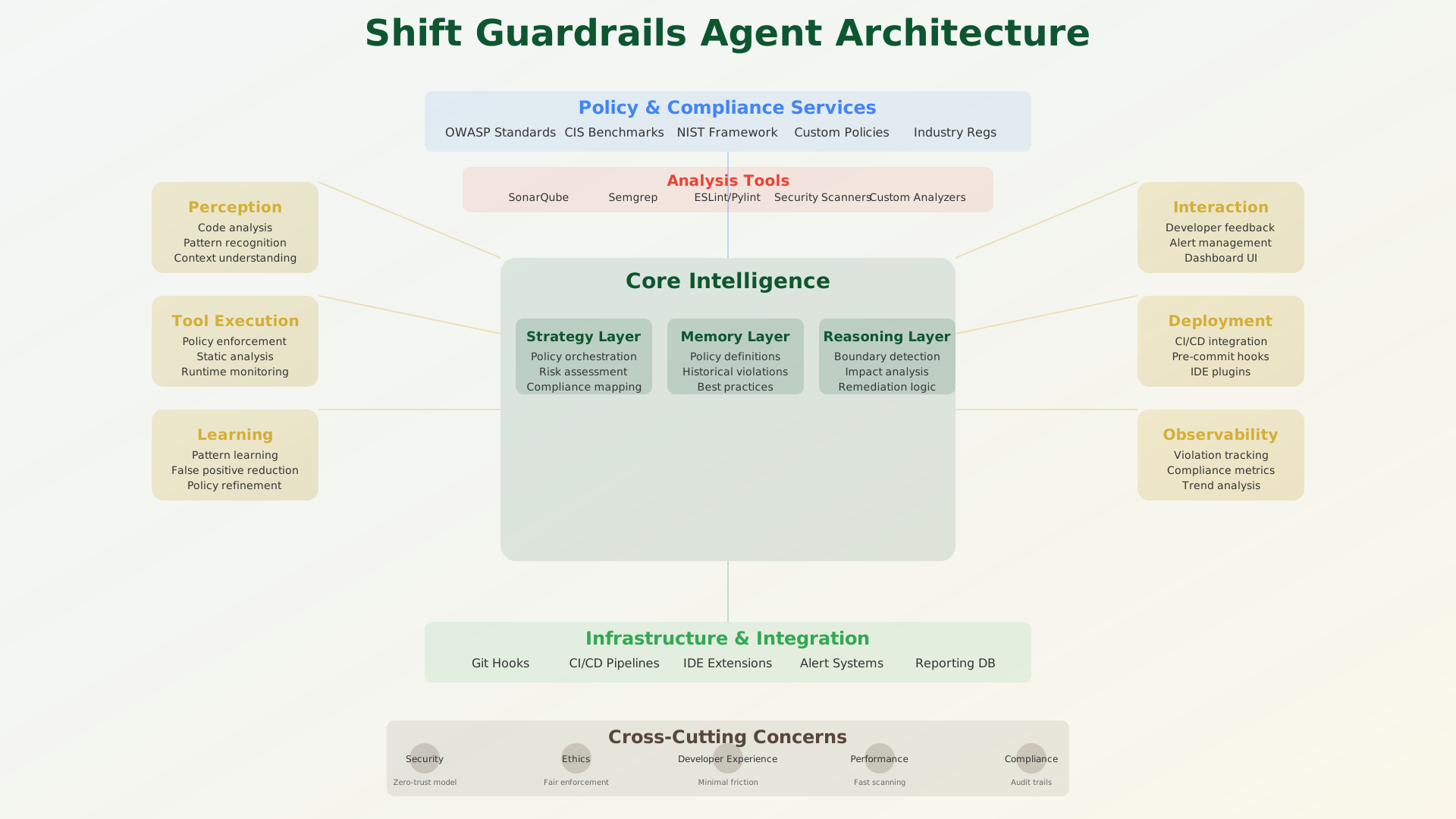
Core Intelligence Layer Requirements
The agent's governance-focused "brain," combining deep regulatory knowledge with intelligent policy analysis to provide automated compliance management and proactive risk mitigation across all AI operations.
Strategy Layer
- Policy Framework Planning: Decompose complex regulatory requirements into enforceable policy rules with automatic conflict resolution and compliance validation.
- Risk-Based Governance: Prioritize governance enforcement based on business impact, regulatory severity, and operational risk assessment across different AI use cases.
- Compliance Orchestration: Coordinate multi-framework compliance (GDPR, HIPAA, SOX, PCI-DSS) with unified policy management and reporting.
- Proactive Risk Mitigation: Plan preventive measures based on violation trend analysis and emerging regulatory requirements to avoid compliance incidents.
Memory Layer
- Policy Knowledge Base: Maintain comprehensive database of regulatory requirements, organizational policies, best practices, and compliance precedents across multiple jurisdictions.
- Violation Pattern Repository: Store detailed records of policy violations, their contexts, resolution strategies, and prevention measures for continuous improvement.
- Compliance History Analytics: Track compliance posture evolution, audit results, and regulatory changes to inform policy updates and risk assessment.
- Simulation Experiment Data: Remember sandbox experiment results, policy impact assessments, and safe testing outcomes for evidence-based policy refinement.
Reasoning Layer
- Multi-Framework Compliance Analysis: Execute sophisticated analysis considering multiple regulatory frameworks, organizational policies, and business contexts simultaneously.
- Chain of Compliance Reasoning: Provide detailed explanations for policy decisions with regulatory citations, risk assessment, and business impact analysis.
- Predictive Violation Analysis: Anticipate potential compliance violations based on usage patterns, policy changes, and emerging regulatory trends.
- Policy Conflict Resolution: Intelligently resolve conflicts between different compliance requirements and organizational policies with transparent decision logic.
Adapters Layer Requirements
Specialized interfaces enabling comprehensive integration with compliance frameworks, simulation environments, audit systems, and AI operations platforms to deliver enterprise-grade governance automation and risk management.
Perception
- AI Operations Monitoring: Monitor all AI agent activities, prompt usage, data processing, and model interactions for compliance validation and policy enforcement.
- Regulatory Change Detection: Track regulatory updates, policy changes, and compliance requirements across multiple jurisdictions and frameworks for proactive adaptation.
- Violation Pattern Analysis: Analyze compliance incidents, near-misses, and policy violations to identify trends, root causes, and systemic risks.
Tool Execution
- Policy Engine Integration: Execute policy enforcement through Open Policy Agent (OPA), custom rule engines, and enterprise governance platforms with real-time validation.
- Simulation Environment Management: Create and manage isolated sandbox environments for safe AI experimentation with compliance testing and impact assessment.
- Compliance Reporting Automation: Generate automated compliance reports for GDPR, HIPAA, SOX, and other frameworks with audit-ready documentation and evidence collection.
- Runtime Enforcement: Implement real-time policy enforcement with intelligent blocking, warning systems, and automatic remediation for compliance violations.
Learning
- Policy Effectiveness Analysis: Learn from compliance outcomes to improve policy effectiveness, reduce false positives, and optimize governance strategies.
- Regulatory Trend Recognition: Identify emerging compliance patterns and regulatory trends to proactively update policies and governance frameworks.
- Risk Prediction Improvement: Continuously enhance risk assessment models based on violation patterns and compliance incident outcomes.
Interaction
- Governance Dashboard: Provide comprehensive visibility into compliance posture, policy effectiveness, and risk trends for governance teams and executives.
- Developer Compliance Interface: Integrate with development tools to provide real-time compliance feedback and policy guidance during AI system development.
- Executive Risk Reporting: Generate strategic compliance reports with trend analysis, risk assessment, and regulatory impact forecasting for business leadership.
Deployment
- Enterprise-Wide Coverage: Deploy across all AI operations, development environments, and production systems with unified policy management and enforcement.
- Cloud-Agnostic Architecture: Support deployment across AWS, GCP, Azure, and hybrid environments with consistent governance and compliance capabilities.
- High Availability Governance: Ensure continuous compliance monitoring and policy enforcement with redundant deployment and failover mechanisms.
Observability
- Compliance Metrics Dashboard: Track policy enforcement effectiveness, violation rates, compliance posture trends, and regulatory risk across all AI operations.
- Audit Intelligence: Monitor audit readiness, compliance evidence quality, and regulatory change impact with predictive audit preparation.
- Governance Performance Analytics: Analyze governance efficiency, policy optimization opportunities, and compliance cost-effectiveness for continuous improvement.
Cross-Cutting Concerns Layer Requirements
Enterprise governance principles ensuring the agent operates with the highest compliance standards while delivering consistent policy enforcement, regulatory adherence, and strategic risk management across all AI operations.
Security
- Governance Data Protection: Secure policy data, compliance records, and audit information with encryption, access controls, and comprehensive audit logging.
- Policy Engine Security: Protect policy enforcement mechanisms from tampering, bypass attempts, and unauthorized modifications with cryptographic validation.
- Simulation Environment Isolation: Ensure sandbox environments are completely isolated with no data leakage or unauthorized access to production systems.
Ethics
- Fair Policy Enforcement: Apply governance policies consistently across all teams, applications, and use cases without bias or preferential treatment.
- Transparent Governance: Provide clear explanations for policy decisions and compliance requirements to enable understanding and appropriate compliance.
- Proportionate Enforcement: Apply enforcement measures proportionate to violation severity and business impact, avoiding unnecessarily punitive responses.
Business Value
- Compliance Cost Reduction: Quantify cost savings from automated compliance management, reduced manual audit preparation, and prevented regulatory violations.
- Risk Mitigation ROI: Measure value from avoided compliance penalties, reduced legal costs, and improved regulatory standing through proactive governance.
- Operational Efficiency: Track time savings from automated policy enforcement, streamlined compliance processes, and reduced governance overhead.
Compliance
- Multi-Framework Adherence: Ensure governance operations comply with GDPR, HIPAA, SOX, PCI-DSS, and other relevant regulatory frameworks simultaneously.
- Audit Documentation: Provide comprehensive audit trails of all governance activities with evidence of policy enforcement and compliance validation.
- Regulatory Alignment: Maintain alignment with evolving regulatory requirements and industry best practices through continuous monitoring and adaptation.
User Trust
- Reliable Governance: Provide consistent and predictable policy enforcement with clear escalation procedures and appeals processes.
- Explainable Compliance: Clearly explain governance decisions, policy rationale, and compliance requirements to build understanding and trust.
- Stakeholder Empowerment: Enable appropriate stakeholders to understand, influence, and work effectively within the governance framework.