
Agent Requirements Document (ARD) for
MCP Registry Agent
A comprehensive Kubernetes-native Model Context Protocol catalog system with PostgreSQL backend, automated service discovery, real-time health monitoring, and Prometheus integration for enterprise-scale MCP server management and orchestration.
Goal: To establish a centralized, enterprise-grade service registry for MCP servers that enables automatic discovery, health monitoring, version management, and operational oversight across distributed AI agent ecosystems at scale.
Core Intelligence Layer Requirements
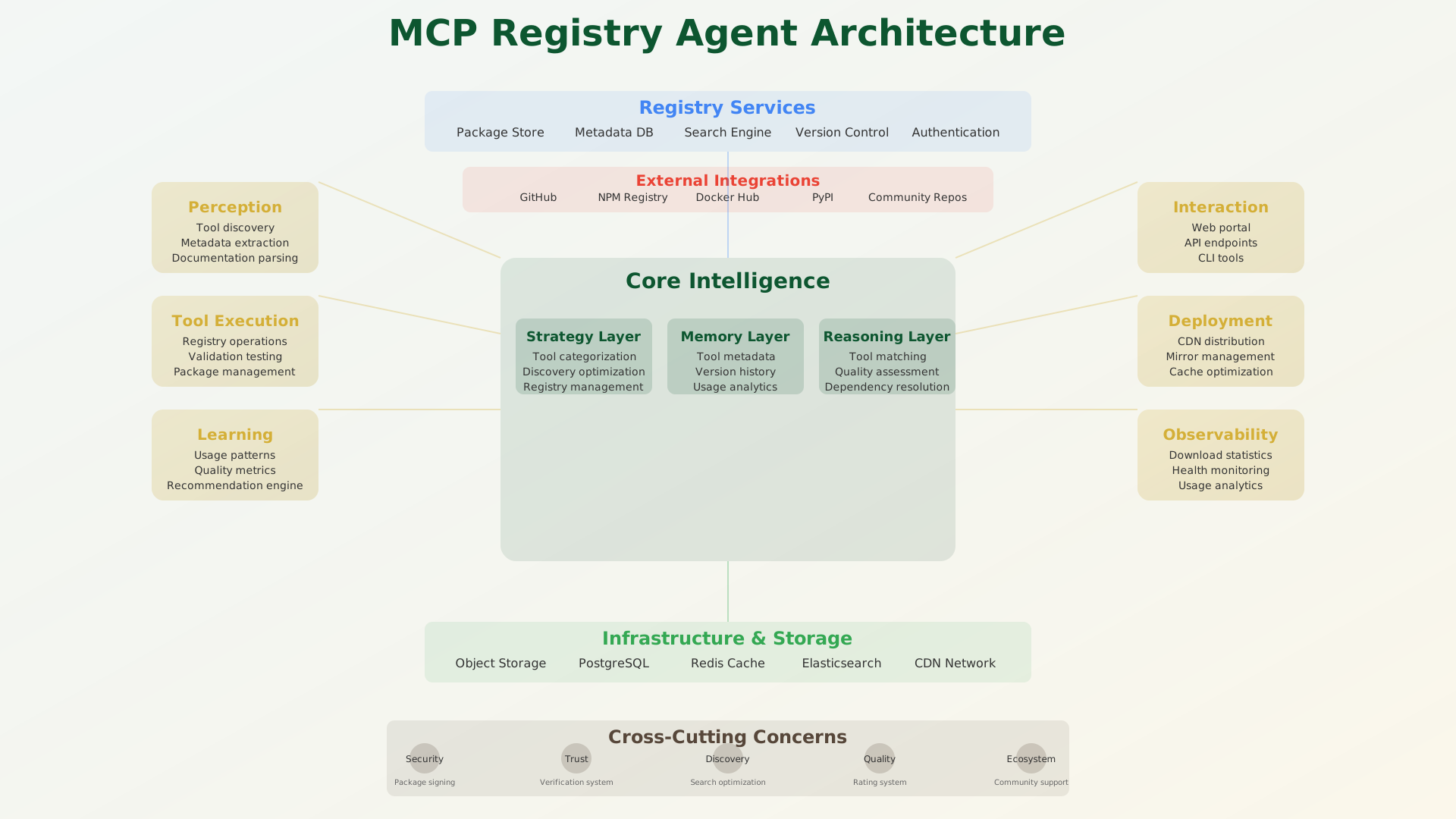
The agent's orchestration-focused "brain," combining deep Kubernetes expertise with advanced service discovery capabilities to provide intelligent MCP server lifecycle management and operational excellence.
Strategy Layer
- Service Discovery Strategy: Decompose complex MCP ecosystem into discoverable, manageable service units with intelligent categorization and dependency mapping.
- Health Monitoring Planning: Design comprehensive health check strategies considering service dependencies, performance baselines, and failure detection patterns.
- Scaling Orchestration: Plan dynamic scaling strategies for MCP services based on usage patterns, resource consumption, and performance requirements.
- Version Management Strategy: Coordinate service versioning, compatibility validation, and upgrade orchestration across the entire MCP server ecosystem.
Memory Layer
- Service Metadata Repository: Maintain comprehensive PostgreSQL-backed catalog of MCP servers including capabilities, dependencies, performance characteristics, and operational metadata.
- Health History Analytics: Store detailed health monitoring data, performance trends, and failure patterns for predictive maintenance and capacity planning.
- Configuration Baselines: Remember optimal configuration templates, deployment patterns, and operational best practices for different MCP service types.
- Dependency Graph Knowledge: Track complex service relationships, communication patterns, and dependency chains for impact analysis and orchestration planning.
Reasoning Layer
- Multi-Dimensional Service Analysis: Execute sophisticated analysis considering service health, performance, capacity, dependencies, and business impact simultaneously.
- Chain of Operational Reasoning: Provide detailed explanations for service management decisions with supporting evidence from monitoring data and operational patterns.
- Predictive Service Management: Anticipate service failures, capacity requirements, and maintenance needs based on historical patterns and current trends.
- Intelligent Service Placement: Optimize service deployment and resource allocation based on performance requirements, dependencies, and infrastructure constraints.
Adapters Layer Requirements
Specialized interfaces enabling comprehensive integration with Kubernetes orchestration, PostgreSQL data management, Prometheus monitoring, and MCP protocol implementations for enterprise-grade service registry operations.
Perception
- Kubernetes Service Discovery: Monitor Kubernetes clusters for MCP service deployments, configuration changes, and lifecycle events across multiple namespaces and environments.
- Health Status Monitoring: Process health check results from REST, gRPC, and custom health endpoints to maintain real-time service status awareness.
- Performance Metrics Collection: Analyze Prometheus metrics, custom performance indicators, and resource utilization patterns for comprehensive service assessment.
Tool Execution
- Kubernetes Operator Framework: Execute service lifecycle management through custom Kubernetes operators with automated deployment, scaling, and configuration management.
- PostgreSQL Data Management: Manage comprehensive service catalog with ACID transactions, complex queries, and high-performance indexing for large-scale service registries.
- Prometheus Integration: Configure monitoring, alerting, and performance tracking with automated metric collection and custom dashboard generation.
- Service Health Orchestration: Execute automated health checks, failure recovery procedures, and service dependency management across the entire MCP ecosystem.
Learning
- Service Pattern Recognition: Learn optimal deployment patterns, resource allocation strategies, and configuration templates from successful service operations.
- Failure Prediction: Identify early warning indicators for service failures and capacity issues to enable proactive maintenance and resource planning.
- Performance Optimization: Continuously improve service placement, resource allocation, and monitoring strategies based on operational feedback and performance data.
Interaction
- Service Catalog Dashboard: Provide comprehensive visibility into MCP service ecosystem with interactive service maps, health status, and operational metrics.
- Developer Service Portal: Enable developers to discover, register, and manage MCP services with self-service capabilities and automated documentation.
- Operations Command Center: Deliver centralized operations interface for service lifecycle management, incident response, and capacity planning.
Deployment
- Multi-Cluster Architecture: Deploy across multiple Kubernetes clusters with federated service discovery and unified management plane for enterprise-scale operations.
- High Availability Design: Implement PostgreSQL clustering, Kubernetes operator redundancy, and distributed monitoring for continuous service registry availability.
- Cloud-Native Integration: Native integration with AWS EKS, GCP GKE, and Azure AKS with cloud-specific service discovery and monitoring capabilities.
Observability
- Service Ecosystem Analytics: Track service discovery success rates, health monitoring effectiveness, and registry performance across the entire MCP ecosystem.
- Operational Metrics Dashboard: Monitor service registration patterns, usage trends, failure rates, and capacity utilization with predictive analytics.
- Performance Intelligence: Analyze service performance trends, resource optimization opportunities, and scaling requirements for continuous improvement.
Cross-Cutting Concerns Layer Requirements
Enterprise orchestration principles ensuring the agent delivers reliable service registry operations while maintaining high availability, data consistency, and operational excellence across distributed infrastructure.
Security
- Registry Data Protection: Secure service catalog data with encryption at rest and in transit, role-based access controls, and comprehensive audit logging.
- Service Authentication: Implement strong authentication and authorization for service registration and discovery with certificate-based validation.
- Infrastructure Security: Protect Kubernetes operators and PostgreSQL databases with security hardening, network policies, and vulnerability management.
Ethics
- Fair Service Management: Apply consistent service management policies across all teams and applications without bias or preferential treatment.
- Transparent Operations: Provide clear visibility into service management decisions and operational procedures for all stakeholders.
- Resource Equity: Ensure fair allocation of infrastructure resources and monitoring capabilities across different service categories and teams.
Business Value
- Operational Efficiency ROI: Quantify cost savings from automated service management, reduced manual operations, and improved system reliability.
- Developer Productivity: Measure time savings from automated service discovery, self-service capabilities, and streamlined deployment processes.
- Infrastructure Optimization: Track cost reductions from optimized resource allocation, capacity planning, and automated scaling capabilities.
Compliance
- Operational Governance: Ensure service registry operations comply with enterprise governance policies and operational standards.
- Audit Documentation: Provide comprehensive audit trails of service lifecycle events, configuration changes, and operational decisions.
- Regulatory Alignment: Support compliance requirements for data handling, service management, and infrastructure operations across different regulatory frameworks.
User Trust
- Reliable Service Discovery: Maintain consistent and accurate service registry information with high availability and data integrity guarantees.
- Predictable Operations: Provide stable and predictable service management behavior with clear escalation procedures and support channels.
- Developer Empowerment: Enable development teams to effectively manage their services with clear documentation and intuitive interfaces.