
Agent Requirements Document (ARD) for
MCP Preflight Agent
A comprehensive security validation gateway that performs pre-connection security checks on Model Context Protocol (MCP) servers, including registry verification, CVE scanning, policy validation, and compliance reporting to ensure secure AI agent ecosystems.
Goal: To establish a robust security perimeter for MCP-based AI agent interactions by automatically validating server security posture, enforcing organizational policies, and providing continuous compliance monitoring before allowing any AI agent connections.
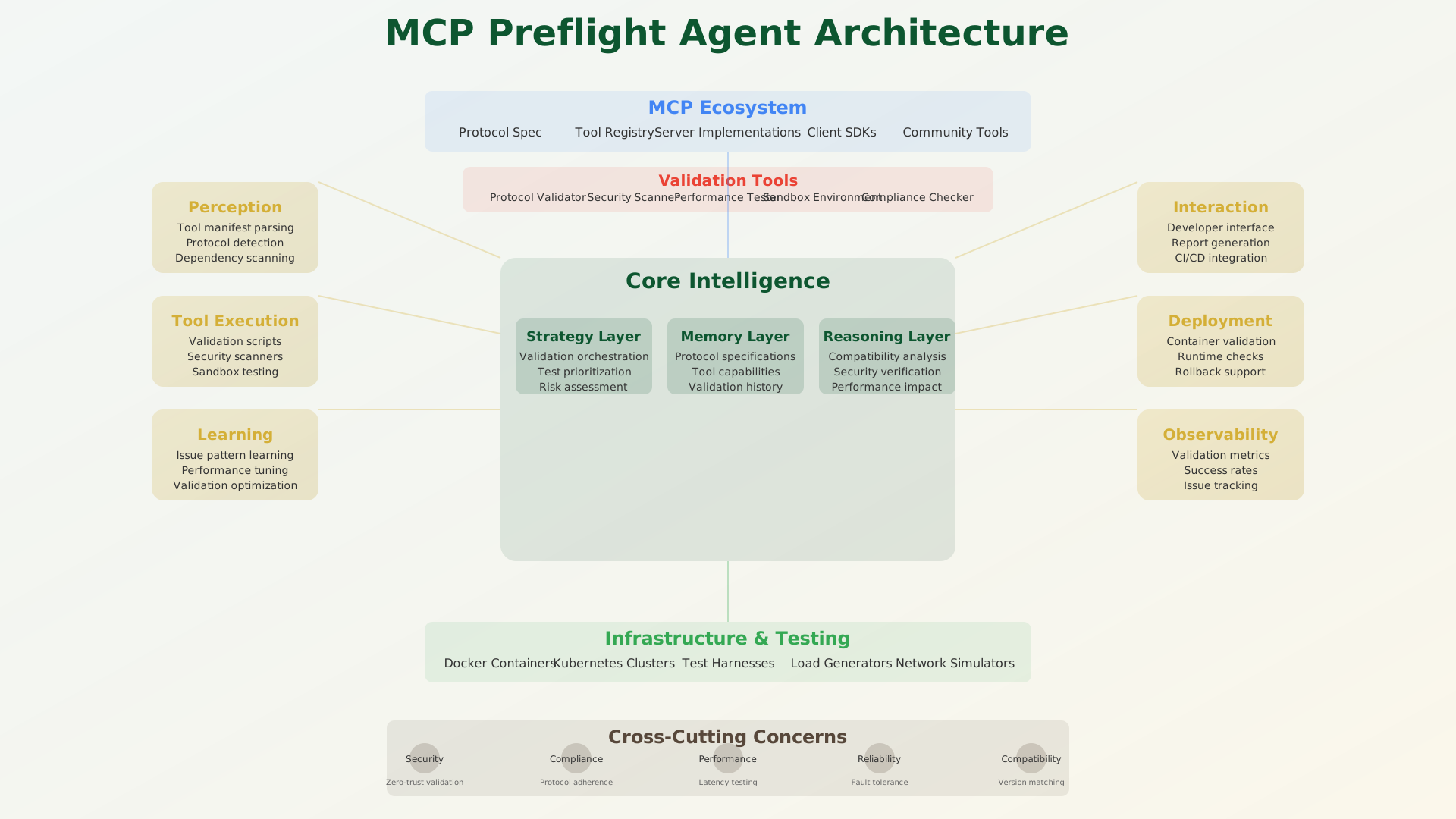
Core Intelligence Layer Requirements
The agent's security-first "brain," combining deep MCP protocol understanding with comprehensive security validation expertise to provide automated gatekeeper functionality for AI agent ecosystem security.
Strategy Layer
- Security Validation Planning: Decompose MCP server security assessment into comprehensive validation layers (registry → CVE → policy → compliance → certificate validation).
- Risk-Based Gating: Implement graduated security controls based on server trust levels, organizational risk tolerance, and compliance requirements.
- Policy Enforcement Strategy: Align security validation with organizational governance policies, compliance frameworks, and AI usage guidelines.
- Continuous Monitoring Planning: Plan ongoing security posture monitoring and re-validation schedules for connected MCP servers and their security status changes.
Memory Layer
- MCP Server Registry: Maintain comprehensive database of approved MCP servers, their security profiles, validation history, and trust relationship metadata.
- Vulnerability Intelligence: Store detailed CVE information, security advisory data, and threat intelligence specific to MCP implementations and related infrastructure.
- Policy Compliance History: Track policy validation results, compliance status changes, and historical security posture evolution for all evaluated servers.
- Certificate and Trust Chain Data: Remember TLS certificate information, trust chain validation results, and certificate lifecycle management details.
Reasoning Layer
- Multi-Layer Security Analysis: Execute comprehensive security evaluation considering registry status, vulnerability exposure, policy compliance, and trust validation simultaneously.
- Chain of Security Reasoning: Provide detailed explanations for security decisions with supporting evidence from multiple validation sources and risk assessment factors.
- Risk Aggregation Logic: Intelligently combine multiple security factors to produce overall risk scores and connection authorization decisions.
- Policy Conflict Resolution: Resolve conflicts between different security policies and compliance requirements to make consistent authorization decisions.
Adapters Layer Requirements
Specialized interfaces enabling comprehensive integration with MCP registries, vulnerability databases, policy engines, and compliance frameworks to deliver automated security validation at enterprise scale.
Perception
- MCP Registry Analysis: Monitor approved MCP server registries, version changes, security updates, and server metadata for comprehensive security status assessment.
- Vulnerability Database Integration: Process CVE feeds, security advisories, and threat intelligence specific to MCP implementations and related network protocols.
- TLS Certificate Inspection: Analyze certificate chains, validation paths, expiration status, and cryptographic strength for all MCP server connections.
Tool Execution
- MCP Registry APIs: Execute validation queries against official and enterprise MCP registries with real-time status checking and metadata retrieval.
- CVE Scanning Integration: Coordinate with vulnerability scanners including NVD, Snyk, and custom security tools for comprehensive vulnerability assessment.
- Policy Engine Integration: Execute policy validation through Open Policy Agent (OPA), custom policy frameworks, and enterprise governance systems.
- Compliance Reporting: Generate automated compliance reports for SOC2, ISO27001, GDPR, and industry-specific regulatory requirements.
Learning
- Security Pattern Recognition: Learn from security incidents and validation failures to improve threat detection and risk assessment accuracy.
- Policy Optimization: Continuously refine security policies based on operational experience and emerging threat patterns in the MCP ecosystem.
- False Positive Reduction: Improve validation accuracy by learning from security team feedback and validation outcome analysis.
Interaction
- Security Operations Dashboard: Provide comprehensive visibility into MCP server security status, validation results, and threat landscape for security teams.
- Developer Security Guidance: Integrate with development tools to provide real-time security feedback and compliance guidance for MCP server selection.
- Automated Blocking Interface: Enable immediate connection blocking and security incident response when critical security violations are detected.
Deployment
- Edge Security Gateway: Deploy as network gateway component to intercept and validate all MCP connections before they reach internal AI agent infrastructure.
- Cloud-Native Architecture: Support deployment across AWS, GCP, and Azure with native integration to cloud security services and networking components.
- High Availability Security: Ensure continuous security validation with redundant deployment and failover mechanisms to prevent security gaps.
Observability
- Security Metrics Dashboard: Track validation success rates, threat detection statistics, policy compliance levels, and security posture trends across all MCP connections.
- Threat Intelligence Analytics: Monitor emerging threats in the MCP ecosystem and their potential impact on organizational security posture.
- Compliance Reporting: Provide comprehensive audit trails and compliance evidence for regulatory requirements and internal security assessments.
Cross-Cutting Concerns Layer Requirements
Enterprise security principles ensuring the agent operates as a reliable security gatekeeper while maintaining high availability, regulatory compliance, and seamless integration with existing security infrastructure.
Security
- Zero-Trust Validation: Apply zero-trust principles to all MCP server connections with continuous verification and comprehensive security assessment.
- Secure Gateway Operations: Protect the validation gateway itself through hardened deployment, encrypted communications, and secure credential management.
- Defense in Depth: Implement multiple validation layers to ensure comprehensive security coverage and prevent bypass attempts.
Ethics
- Fair Security Assessment: Apply consistent security criteria across all MCP servers without bias toward specific vendors or implementation approaches.
- Transparent Security Decisions: Provide clear explanations for security validation decisions to enable proper risk management and appeal processes.
- Privacy-Preserving Validation: Conduct security validation without compromising sensitive information or violating privacy requirements.
Business Value
- Risk Reduction ROI: Quantify security risk reduction and potential cost avoidance from prevented security incidents through automated validation.
- Operational Efficiency: Measure time savings from automated security validation compared to manual security assessment processes.
- Compliance Cost Savings: Track cost reductions from automated compliance reporting and reduced audit preparation overhead.
Compliance
- Regulatory Adherence: Ensure security validation processes comply with relevant regulations (SOX, HIPAA, GDPR, PCI-DSS) and industry frameworks.
- Audit Documentation: Provide comprehensive audit trails of all security validation activities with evidence of compliance and risk assessment.
- Framework Alignment: Align with security frameworks (NIST, ISO27001, CIS Controls) and industry best practices for secure AI operations.
User Trust
- Explainable Security Decisions: Provide clear explanations for security validation outcomes with supporting evidence and remediation guidance.
- Consistent Security Standards: Maintain predictable and reliable security validation criteria across all MCP server assessments.
- Security Team Control: Enable security teams to review, override, and customize validation policies with clear governance procedures.