
Agent Requirements Document (ARD) for
JIRA Learnings Agent
NLP-Powered Issue Analysis & Resolution Intelligence for Enhanced Development Workflow
Mission: Transform JIRA ticket data into actionable insights through advanced natural language processing, pattern recognition, and automated resolution suggestions to accelerate development cycles and improve code quality.
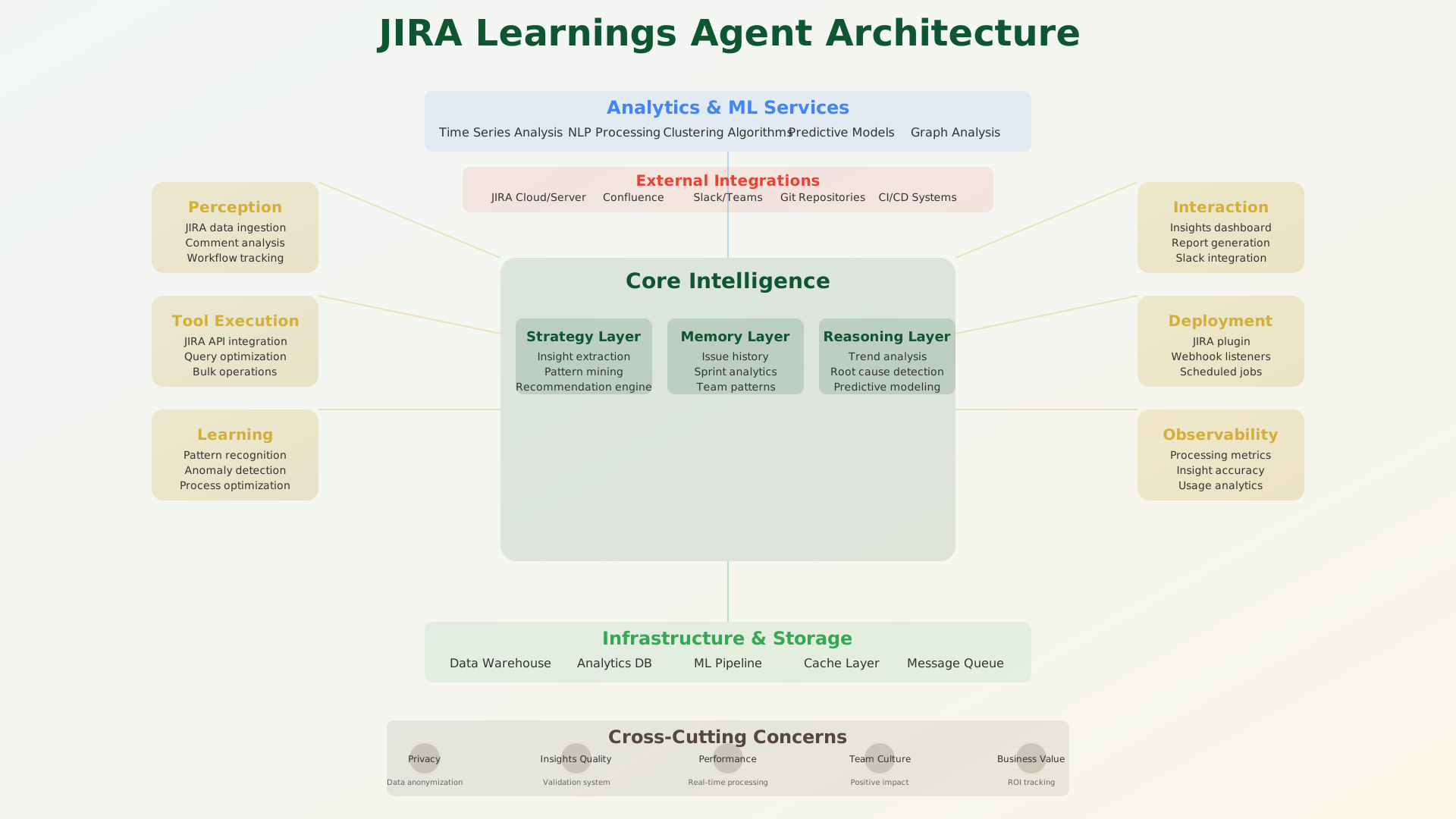
Core Intelligence Layer Requirements
Advanced cognitive capabilities for understanding, analyzing, and learning from JIRA issue patterns and development workflows.

Strategy Layer
- Issue Pattern Recognition: Identify recurring patterns in JIRA tickets across projects, components, and time periods
- Resolution Strategy Planning: Develop multi-step resolution plans based on similar historical issues and their outcomes
- Priority Intelligence: Dynamically assess and recommend issue priorities based on business impact and technical complexity
- Resource Allocation: Optimize developer assignment based on expertise areas, workload, and historical success rates
- Process Optimization: Continuously refine workflow processes based on cycle time analysis and bottleneck identification

Memory Layer
- Historical Issue Repository: Maintain comprehensive database of resolved issues with context, solutions, and outcomes
- Developer Knowledge Graph: Build and maintain expertise profiles for team members based on successful resolutions
- Semantic Issue Embeddings: Create vector representations of issues for similarity matching and clustering analysis
- Resolution Pattern Storage: Archive successful resolution patterns and code changes for future reference
- Cross-Project Learning: Retain learnings across different projects and apply insights organization-wide

Reasoning Layer
- Multi-Modal Analysis: Combine text analysis, code diff patterns, and developer behavior to understand issue complexity
- Causal Inference: Identify root causes by analyzing relationships between code changes, deployments, and issue reports
- Uncertainty Quantification: Provide confidence scores for resolution suggestions and effort estimates
- Chain of Reasoning: Document decision-making process for resolution recommendations with transparent logic
- Predictive Analytics: Forecast potential issues based on code patterns, deployment schedules, and historical data
Adapters Layer Requirements
Specialized interfaces for comprehensive JIRA ecosystem integration, advanced NLP processing, and intelligent workflow automation.

Perception
- Advanced NLP Processing: Extract entities, sentiment, and technical concepts from issue descriptions and comments
- Code Context Understanding: Analyze code snippets, stack traces, and error logs within JIRA tickets
- Multi-Language Support: Process issues written in multiple languages with context-aware translation
- Attachment Analysis: Process screenshots, logs, and documentation attachments for additional context
- Real-Time Data Ingestion: Monitor JIRA webhooks for immediate processing of new and updated issues

Tool Execution
- JIRA API Integration: Comprehensive read/write access to JIRA projects, issues, workflows, and custom fields
- Git Repository Analysis: Connect to GitHub/GitLab to analyze code changes related to issues
- CI/CD Pipeline Integration: Monitor build and deployment data to correlate with issue patterns
- Knowledge Base Updates: Automatically update internal documentation based on resolved issues
- Notification Systems: Send intelligent alerts via Slack, email, and other communication channels

Learning
- Continuous Model Training: Refine NLP models based on new issue patterns and resolution outcomes
- Feedback Loop Integration: Learn from developer feedback on resolution suggestions and accuracy
- Pattern Evolution Tracking: Adapt to changing development practices and emerging issue types
- Performance Optimization: Continuously improve prediction accuracy and processing speed
- Cross-Team Learning: Share insights and improvements across different development teams

Interaction
- Interactive Dashboard: Provide rich visualizations of issue trends, resolution patterns, and team performance
- Conversational Interface: Enable natural language queries about issue history and patterns
- Smart Suggestions: Proactively recommend actions, assignees, and resolution approaches
- Developer IDE Integration: Provide contextual insights directly within development environments
- Mobile Accessibility: Offer mobile-friendly interfaces for on-the-go issue management

Deployment
- Enterprise Integration: Deploy securely within existing enterprise infrastructure with SSO and RBAC
- Scalable Architecture: Auto-scale processing power based on JIRA activity and analysis complexity
- Multi-Instance Support: Support multiple JIRA instances and cross-instance analytics
- Disaster Recovery: Implement robust backup and recovery procedures for critical learning data
- Zero-Downtime Updates: Deploy updates without interrupting ongoing issue analysis and suggestions

Observability
- Analytics Dashboard: Comprehensive metrics on resolution accuracy, processing time, and user satisfaction
- Model Performance Monitoring: Track ML model drift, accuracy degradation, and retraining needs
- Usage Analytics: Monitor feature adoption, user engagement, and ROI measurements
- Error Tracking: Detailed logging and alerting for processing failures and data quality issues
- Business Impact Metrics: Track development velocity improvements and issue resolution acceleration
Cross-Cutting Concerns Layer Requirements
Enterprise-grade security, privacy, and governance frameworks ensuring responsible AI deployment in development environments.
 Security
- Data Privacy Protection: Ensure sensitive code and issue data is encrypted and access-controlled
- PII Detection: Automatically identify and protect personal information in issue descriptions
- Secure API Access: Implement OAuth2 and API key management for all external integrations
- Audit Trail: Maintain comprehensive logs of all data access and processing activities
- Vulnerability Scanning: Regular security assessments of the agent infrastructure and dependencies
 Ethics
- Bias-Free Analysis: Ensure recommendations are not influenced by developer demographics or team politics
- Fair Resource Allocation: Prevent algorithmic bias in workload distribution and developer assignments
- Transparency: Provide clear explanations for all recommendations and decision-making processes
- Privacy by Design: Minimize data collection to essential information only for functionality
- Human Agency: Ensure developers maintain control over final decisions and can override suggestions
 Business Value
- Development Velocity: Measure and improve sprint completion rates and cycle time reduction
- Quality Improvement: Track reduction in bug recurrence and post-release defects
- Resource Optimization: Optimize developer productivity and reduce context switching overhead
- Knowledge Retention: Prevent knowledge loss when team members transition between projects
- ROI Measurement: Quantify time savings and productivity gains from intelligent issue resolution
 Ecosystem
- Tool Integration: Seamless integration with popular development tools (IDEs, Git, CI/CD)
- Plugin Architecture: Extensible system for custom integrations and specialized analysis modules
- API Standards: RESTful APIs and webhook support for third-party integrations
- Multi-Platform Support: Compatibility with cloud, on-premise, and hybrid JIRA deployments
- Community Contributions: Framework for sharing insights and improvements across organizations
 Governance
- Model Governance: Version control and approval processes for ML model updates and deployments
- Data Governance: Clear policies for data retention, access, and quality management
- Compliance Framework: Adherence to software development standards and regulatory requirements
- Change Management: Controlled rollout of new features with impact assessment and rollback procedures
- Risk Management: Proactive identification and mitigation of operational and technical risks
 User Trust
- Explainable AI: Clear, technical explanations for all recommendations and pattern identifications
- Confidence Indicators: Transparent confidence levels for all suggestions and predictions
- User Control: Granular settings for customizing analysis depth and recommendation types
- Feedback Mechanisms: Easy ways for developers to provide feedback and improve system accuracy
- Performance Transparency: Regular reporting on system accuracy, improvements, and limitations
Ready to Transform Your Development Workflow?
Deploy the JIRA Learnings Agent to unlock actionable insights from your development data and accelerate issue resolution.